How Lead Investor Dynamics Shape a Seed Round
The lead investor's signature matters more than the total check size you raise.
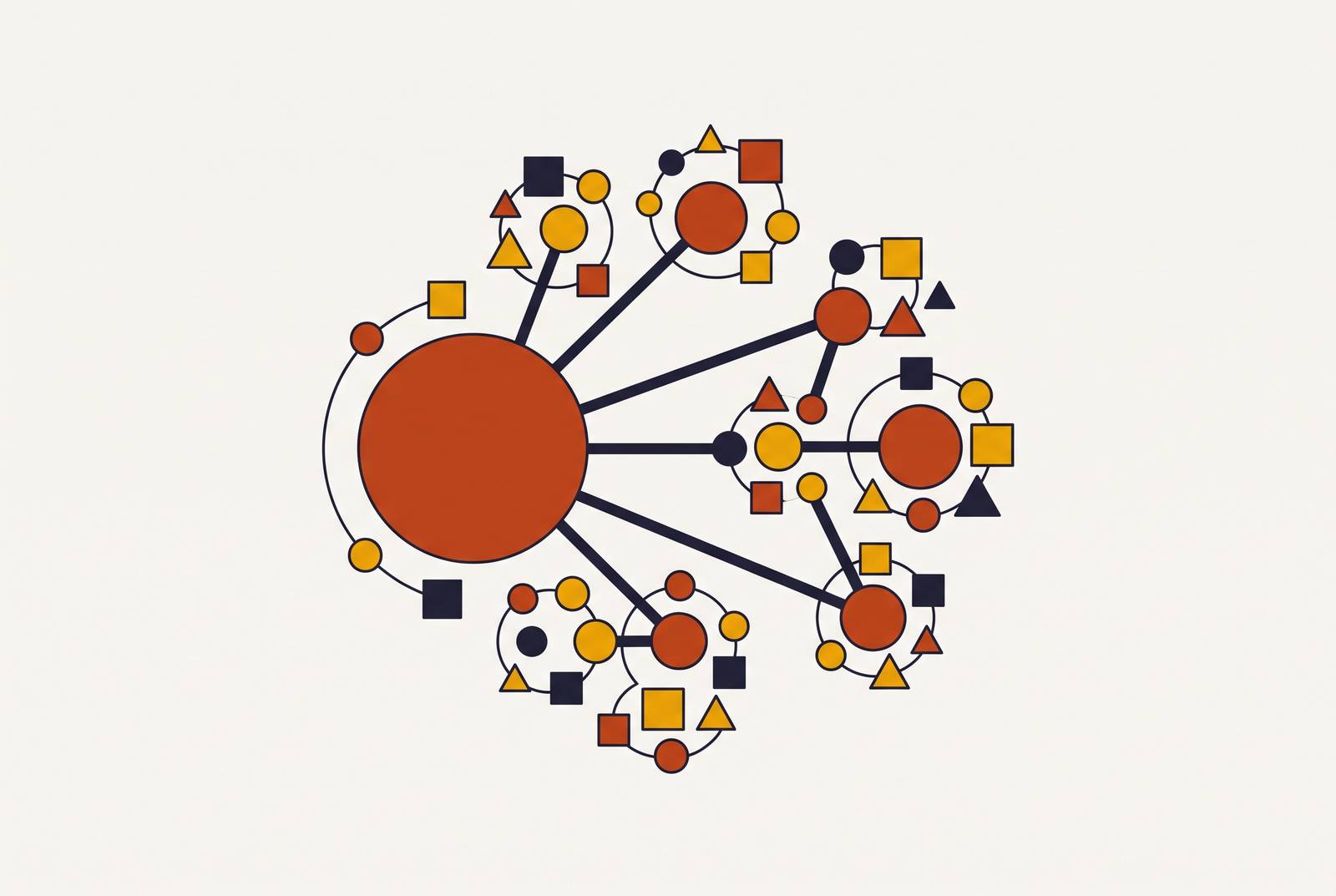
A seed round doesn't close because a founder found enough investors willing to write checks. It closes because one investor decided to write the first check, and everyone else decided that decision was good enough to follow. That investor is the lead, and finding one has almost nothing in common with the general fundraising process most founders think they're running.
The lead typically puts in 30% to 50% of the total round, which already tells you this isn't just another name on the cap table. The lead sets the term sheet: pre-money valuation, ownership percentage, liquidation preferences, anti-dilution provisions, board composition. One party negotiates all of it, and everyone else in the round signs what that party agreed to. The lead isn't one voice among several shaping the deal. The lead is the deal, and founders who spend their energy courting five soft yeses instead of one hard yes are solving the wrong problem.
Series A investors read the seed cap table as a quality filter before a founder gets anywhere near a pitch meeting. A recognizable lead is a check a Series A partner can run in five minutes, just by seeing who backed the company first. Rounds without one don't get that shortcut. Leaderless seed rounds struggle to pull in co-investors at all, let alone survive to a follow-on, because an absent lead reads as absent conviction. No amount of founder enthusiasm substitutes for a fund willing to put its name and its capital down first.
The lead's network becomes the main channel through which the Series A conversation starts. A warm introduction from a respected seed investor carries weight a cold email to a Series A partner never will. The brand gets borrowed in ways that show up long before the next raise, too: a senior engineer who wouldn't take a call from a pre-revenue startup suddenly returns it because a name-brand fund is already on the cap table. Validation, recruiting leverage, access to the next round, none of that comes from capital alone. It traces back to a signature, not just a check.
The 2026 seed market the lead search is happening inside
Early-stage deal activity is climbing in 2026, but the money is pooling at the top in a way that should worry anyone running an ordinary-sized raise. Crunchbase found that the five largest startups alone captured close to $84 billion in 2025, roughly a fifth of all venture funding. That capital never reaches a first-time founder raising a modest seed round, no matter how sharp the pitch.
Seed deal volume in North America dropped even as valuations climbed: fewer deals, bigger checks per deal, a higher bar for what clears an investment committee. The long-predicted shift where seed becomes the new Series A is now structural. Rounds under a certain size made up less than half of all VC deals by early 2025, down from more than 70% a decade earlier. Lead investors are underwriting more risk earlier than they were ten years back, because seed is now doing the diligence work Series A used to do.
Layered on top of that, Crunchbase News found AI startups commanding roughly 42% higher seed valuations than non-AI companies, and more than 70% of global startup capital in the second quarter of 2026 went to AI-focused companies. Founders outside that category are competing for the same finite pool of lead attention against companies that are, by the numbers, pulling a disproportionate share of both capital and investor bandwidth. That's the environment the search happens in now, and pretending otherwise wastes months.
How the lead search differs from general investor outreach
Most fundraising advice treats investor outreach as a volume game: build a long list, send a lot of emails, see who responds. That approach fails for lead search, and it fails for a structural reason, not a tactical one. Every investor in a round without a lead is waiting for someone else to move first. Nobody wants to be the first check in, because being first means doing the most diligence with the least social proof. That coordination problem kills more promising fundraises than any flaw in the product or the pitch ever does.
The lead search calls for a shorter, sharper list than general outreach, and founders who resist that instinct are the ones who stall. A tight list of 30 to 50 genuinely relevant investors, targeted where check size, stage focus, and sector thesis actually line up, and tracked individually, beats a mass campaign of two hundred cold names every time. The stakes for precision run higher here than in follow-on fundraising, because the relationship with a lead runs longer and the commitment runs larger.
Thesis fit matters more for a lead than for anyone writing a check behind one. A follow-on investor can lean on the lead's diligence and the safety of terms someone else already negotiated. A lead has no such cover, so conviction has to be strong enough to write the anchor check when nobody else has committed to anything. That bar filters out generic pitches fast. A pitch that could apply to any fund in the sector reads, correctly, as a pitch that wasn't written for this one, and lead investors notice that within the first paragraph.
Matching the right lead type to your stage and company
Seed leads fall into a few structural categories, and picking the wrong one costs more than a slower close. Chasing a marquee multi-stage fund over a pure-seed specialist, purely for the logo, is usually the wrong trade, because it can cost a founder the partner attention that actually makes a lead useful.
Pure seed specialists write checks from the low hundreds of thousands up to a couple million, invest only at this stage, and build deep pattern recognition because seed is the whole mandate. NFX, founded by Pete Flint, James Currier, Gigi Levy-Weiss, and Stan Chudnovsky, focuses on network-effects businesses at pre-seed and seed. Floodgate, BoxGroup, and Hyperplane sit in similar territory, with partners whose full-time job is evaluating companies at exactly the stage a founder is raising for.
Multi-stage funds with dedicated seed programs offer something different: partner continuity across rounds and real follow-on depth if the company performs. Andreessen Horowitz runs an active seed practice inside a larger multi-stage fund, and other major multi-stage firms have moved similarly upstream. Andreessen Horowitz's recent activity includes Unconventional AI, which raised a seed round several times the ordinary size at a multi-billion-dollar valuation, co-led with Lightspeed Venture Partners, along with a sizable seed check for Mirelo AI. The upside is obvious: the same fund, sometimes the same partner, can carry a company from seed through Series A and past it. The downside is quieter but just as real. A seed check inside a large multi-stage fund is one bet among many, and it rarely gets the attention that a pure-seed firm gives a company where that check is the whole thesis, not a rounding error in a much bigger portfolio. Founders who need hand-holding through the first eighteen months should weight that fact heavily.
Strategic and corporate investors write smaller checks, usually in the low hundreds of thousands up to about a million, often paired with a pilot, a distribution deal, or a data partnership. That commercial fit can be a genuine advantage. It can also turn into a headache later, when an institutional lead shows up at Series A and has to negotiate around a corporate investor's existing rights.
Beyond those three categories, the active seed landscape includes Global Founders Capital, writing a modest amount up to roughly a million dollars across a multi-stage practice with a strong seed presence; Crosslink Capital, based in the Bay Area, writing sums ranging up into the several millions across seed and Series A; SpeedInvest, focused on European seed deals ranging from a modest amount up to a few million dollars; and Village Global, backed by Reid Hoffman, Eric Schmidt, and Jeff Bezos, writing smaller checks in the low hundreds of thousands up to roughly a million dollars. Soma Capital, Ulu Ventures, Forerunner Ventures, SeedCamp, and LocalGlobe round out the list of funds actively leading at this stage.
First Round Capital, founded in 2004 as a seed-stage specialist, now invests as a generalist across AI, enterprise software, fintech, healthcare, and consumer. It led Uber's seed round in 2010 and led Pomelo Care's 2021 seed round. More recently, it has backed seed rounds for Clay, Together AI, Fal, Parallel, Reducto, Rillet, Verkada, and K2 Space, a track record that shows what pattern recognition looks like after two decades of doing nothing else.
What lead investors evaluate that co-investors don't
The lead does the heaviest diligence in the round, full stop. It works through financials, market sizing, competitive landscape, and the founding team's background and division of labor in a level of detail that follow-on investors, in most cases, simply inherit. The lead's standard becomes the round's standard: once the lead is convinced, everyone else's bar drops considerably. That's precisely why the wrong lead is dangerous. A soft, undiscerning lead can wave through a company that shouldn't have cleared diligence, and the entire round inherits that mistake without ever checking it themselves.
What the lead finds during that process shapes the terms it proposes directly. A founder who understands that connection can anticipate how the numbers in the deck will get read, and prepare for the valuation, liquidation preference, and anti-dilution questions before the lead ever asks them.
Optimizing for the highest possible seed valuation feels like a win in the moment. It's usually the wrong call, because it sets a floor the Series A has to clear, and this trap catches ambitious founders more often than cautious ones. A raise in the mid-single-digit millions at a post-money valuation several times that size can make the Series A math genuinely ugly if growth doesn't compound fast enough to justify a step-up from that number. A competent lead flags this during negotiation instead of letting a founder walk into it. Chasing the highest term sheet on the table, rather than the cleanest one, is one of the more common and more avoidable errors at this stage.
The lead runs the dilution math throughout diligence, quietly, because it bears directly on returns. Median dilution at seed is around 18%, but total founder dilution climbs to somewhere between 25% and 28% once the pre-money option pool carve-out gets factored in. Ownership data from 2026 shows the median founding team retains about 56% of the company after seed, dropping to 36% after Series A and 23% by Series B. The lead models that entire trajectory before signing anything, because its own return depends on how much of the company remains to dilute in later rounds.
Running the Lead Search as a Structured Process
Treating the lead search as something that happens casually, between product work and customer calls, is how founders end up leaderless three months into a raise. It has to run as a time-boxed operation, with a defined target list, a specific outreach sequence, and a pipeline tracked with the same discipline a sales team applies to closing deals.
Start with a tiered list of 30 to 50 highly relevant leads, filtered by check size, stage, sector, thesis fit, and recent investment activity. Crunchbase, Signal by NFX, AngelList, and newer AI-powered investor search tools can surface verified profiles showing thesis focus, recent deals, and current openness to new pitches.
Personalize every outreach to a lead candidate. Name the portfolio company that's genuinely analogous, name the specific partner whose public thesis lines up with what's being built, and be honest about what the fund would plausibly claim as a win if the company succeeds. Generic outreach fails at a far higher rate with lead candidates than it does with investors who are only being asked to follow someone else's already-negotiated terms.
Keep the mechanics simple. A short intro email states who the founder is, gives one line of real traction, offers a specific reason for this fund and not just any fund, and makes a direct ask for twenty minutes. Founders who can articulate a sharp, specific reason for reaching out convert to first meetings at meaningfully higher rates than founders sending the same paragraph down a list of two hundred names. The lead search rewards precision in a way the rest of fundraising simply doesn't, and founders who treat it like a numbers game find that out the hard way, usually around month three.