Fundraising Dry Runs Before the Official Process Starts
Founders can test their pitch with lower-stakes investors before approaching their top targets.

The venture market founders are walking into in 2026 has little in common with the market their predecessors raised in five years ago. Capital hasn't dried up, but it has concentrated: AI companies alone captured 65% of all venture deal value in 2025, leaving every founder outside that cohort competing for a shrinking share of attention and discipline-driven checks. The result is what market observers describe as a barbell: capital piles up at the extremes, mega-rounds for category leaders on one end, small seed checks on the other, and a hollowed-out middle where most founders actually have to compete. The number of active VC funds fell from 1,609 to 537 since 2022. The pool of investors a founder can realistically reach has shrunk at the same time competition for their attention has gotten sharper.
Layer onto that an estimated 2,345 VC-backed companies on pace to fail in 2026, with around one-third of them ZIRP-era startups that scaled on cheap capital and are now reckoning with the discipline that era didn't demand. Investors watching that wave of failures are running tighter processes, doing more diligence, and pattern-matching faster on which founders are actually ready. First impressions now carry more weight, not less. That's the environment this piece is about: one where founders need a way to stress-test their readiness before the official process starts, because there's no longer room to figure things out in real time in front of the people who write the checks. That's what a fundraising dry run is for.
What a fundraising dry run is, and what it is not
A dry run is a set of deliberate, informal investor conversations held before the official fundraising process launches. The operative word is deliberate. These aren't the coffee chats that happen because two people know the same person, and they aren't hallway conversations at a conference that go nowhere in particular. A dry run is planned, with a specific hypothesis to test, a version of the narrative to rehearse, and a defined set of signals the founder intends to walk away with.
That distinction separates a dry run from ordinary networking. Networking builds relationships with no particular output in mind. A dry run is a conversation built around a question: does this pitch land, does this assumption hold, does this number actually mean what the founder thinks it means to someone hearing it cold. It's also distinct from a soft launch, which is simply starting the official process quietly with a handful of investors before going wider. A soft launch is still live. A dry run is explicitly pre-process: no term sheets are being solicited, and there's no clock running on momentum.
Choosing the right dry run partners matters as much as running the conversations. The best candidates are investors who are misaligned with the founder's stage or sector but sharp enough to give a real, unfiltered read, precisely because they have no path to saying yes and therefore nothing to lose by being honest. Investors a founder genuinely wants for a future round, but isn't ready to pitch seriously yet, also belong on this list. So do angels and operators in the space who have sat on the other side of the table themselves and know what a real objection sounds like versus a polite one.
Tier 1 targets, the highest-conviction names on a founder's list, do not belong in a dry run. Using a top-priority investor as a practice conversation burns a first impression that only happens once. The mindset that makes dry runs work is treating each one as an operational input, the way a pilot treats a flight simulator. The output is data. It is not a relationship score, and it is not a warm feeling about how the conversation went.
What the dry run is rehearsing: the four things investors assess in early conversations
Four things get tested in every early investor conversation, whether the founder realizes it or not. Narrative clarity comes first: can the founder explain what the company does, why now, and why they're the right team to do it, in under two minutes, without jargon, in a way that makes the opportunity feel inevitable rather than merely plausible.
Metric fluency comes second, and it goes deeper than most founders expect. Investors at seed and Series A care about multiple dimensions of performance beyond the headline ARR number sitting at the top of a deck. Series A benchmarks tend to reward meaningful ARR, consistent growth, and a go-to-market motion that's demonstrably repeatable rather than a one-off win. Knowing exactly where a company sits against those thresholds before any formal conversation starts is baseline preparation, not an advanced move.
Assumption defensibility is the third test, and it's often the one founders are least prepared for. Every pitch rests on assumptions about market size, customer behavior, and competitive moat, and investors will probe every one of them. A dry run is where a founder finds out, in a low-stakes setting, which of those assumptions collapse under a second question.
Founder presence rounds out the list. At early stages, investors back people as much as they back companies, and a dry run reveals whether a founder reads as certain and in command of the material or reactive and unsteady the moment the discussion veers off script. This matters because venture deals at early stages typically require multiple meetings spread across months to close. A founder who walks into meeting one with a shaky narrative doesn't get to reset that impression in meeting two. The dry run exists to absorb that learning curve before the clock on a live process starts running.
The tiered outreach model and the dry run's place inside it
Tiered outreach organizes investor targets into three groups. The highest-conviction names sit in Tier 1, the investors a founder most wants on the cap table. Tier 2 holds strong fits that are slightly less differentiated or slightly less known to the founder. Tier 3 holds legitimate backup targets that carry lower priority.
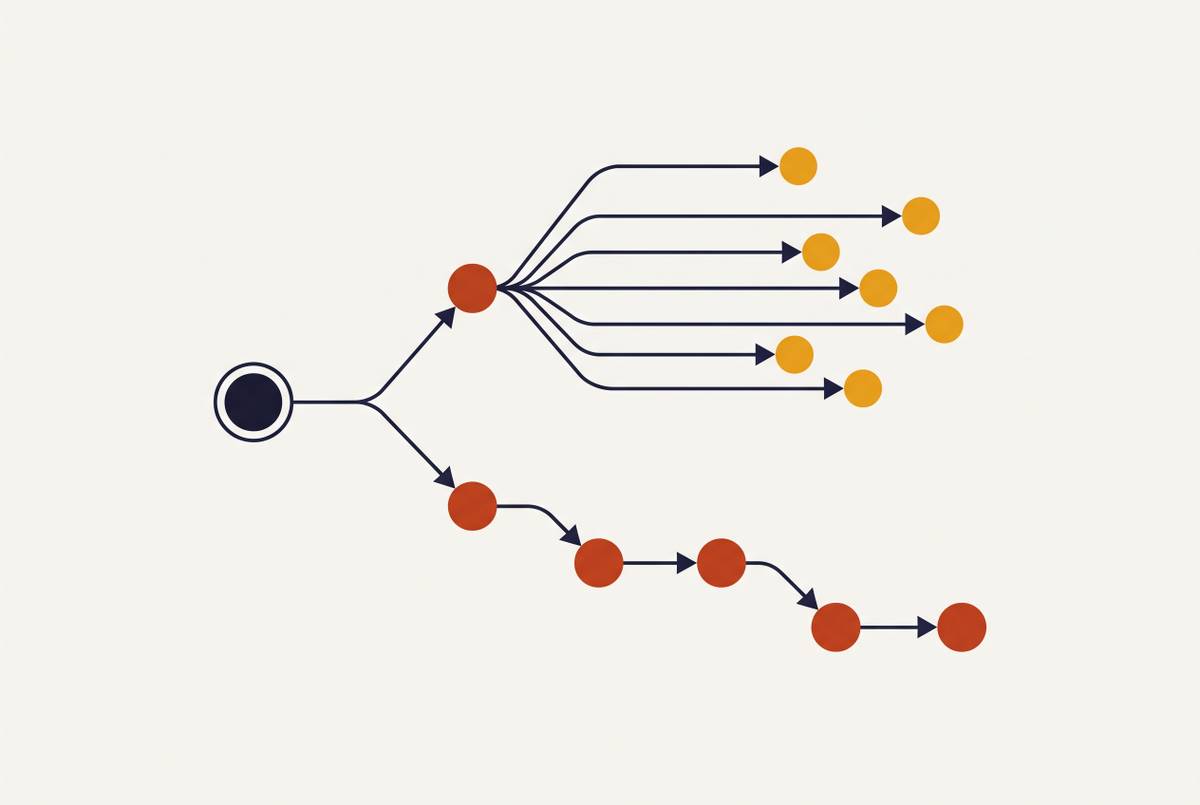
The dry run phase sits before Tier 1 outreach begins, and it's where Tier 2 and Tier 3 conversations do double duty. They build relationships, yes, but they also sharpen the pitch before it ever reaches the investors who matter most. The sequencing logic is straightforward: start with Tier 2 and Tier 3 to refine the pitch, then move to Tier 1 once the pitch is sharp. That's the tiered outreach discipline built into a well-run process, not an optional refinement.
Timing matters here too. Investor conversations should generally start well before a founder actually needs capital in the bank, and the dry run phase occupies the earliest stretch of that window. Certain seasonal windows work better than others: mid-January through mid-May tends to catch investors refreshed and actively looking to build new relationships, while the stretch from just after the early-September start of the fall business calendar through Thanksgiving catches them back from summer and motivated to fill out pipeline before year-end.
The official 8- to 12-week fundraising sprint should only start once the dry run has done its work. At that point the narrative is sharper, the weak assumptions have already been found and patched, and the founder walks in already knowing roughly which questions are coming. Mark these conversations explicitly in pipeline tracking as "pre-process" or "dry run."" Skipping that label makes it easy to start treating them as live meetings, which burns momentum before the real process has even begun.
How to extract good dry run feedback deliberately
The most common failure in a dry run is a conversation that felt good and produced nothing. It's a conversation that felt good and produced nothing. Founders leave encouraged because the investor was polite and warm, and they walk away with no usable signal because nobody asked the hard question that would have exposed it.
The framing at the start of the conversation should do some of that work automatically. Something close to "I'm not in market yet, I want to think out loud about this and get an honest read before I'm live" lowers the stakes for the investor, since they're not being asked to commit to anything, and it gives the founder explicit permission to ask blunter questions than a live pitch would allow.
A handful of questions consistently generate real signal rather than polite encouragement. "What would make this a no for you right now?" Surfaces the actual objection before it appears in a live process where it costs something. "Where did the story feel thin or unconvincing?" Targets gaps in the narrative itself as well as gaps in the facts. "What would you need to see in six months that you don't see today?" reveals the distance between where the company sits now and where it needs to be to look investable. And "is there a version of this that fits your thesis, and if not, who would be the right person to talk to?" often produces a warm introduction even out of a conversation that was always going to end in a pass.
Notes should be taken verbatim, during the conversation or immediately after, capturing the exchange as it happened rather than as a summary written up later. The specific words an investor uses reveal how they're actually categorizing the company, and that detail gets lost the moment it's paraphrased. When three separate investors independently probe the same assumption, that's not a coincidence: it's a signal pointing at exactly the part of the narrative that needs structural repair before the official process starts. And when a dry run partner raises a concern that later gets addressed, circling back with a short update turns a one-off feedback session into a live relationship with a warm door to walk back through once the raise goes official.
Why dry runs change what founders learn about their investor targeting
Stage fit, sector fit, and geography fit all look obvious on paper and are wrong more often than founders expect. Dry runs expose that mismatch cheaply, before a live outreach slot gets burned finding it out the hard way.
Dry run conversations reveal things about investor fit that research alone can't. They show whether the thesis written on an investor's website actually matches how that investor evaluates deals in a real conversation, which is not always the same thing. They show how fast a given investor moves: responsiveness during a low-stakes, no-pressure conversation is a decent predictor of how that same person behaves once a live deal is on the table. And they show whether an investor is actually deploying capital right now or sitting in a "looking but not moving" posture that a polished website gives no hint of.
Talking to founders already in an investor's portfolio, alongside researching that investor's history with companies at a similar stage, sharpens this picture further, and dry run conversations accelerate that whole process by giving a founder a direct read rather than a secondhand one. Even a dry run with a clearly misaligned investor earns its place: it shows what questions the founder's category triggers in an investor's mind, wrong room or not, and that's useful preparation for the room that actually counts.
Most founders who run a structured set of dry runs end up with a Tier 1 list that looks meaningfully different from the one they started with. Some investors move up because they showed real engagement. Others move down because they signaled misalignment or a pace too slow to be useful. Systematic investor research, understanding check sizes, portfolio composition, thesis signals, and recent deployment activity, before any of these conversations even happen, makes the dry run itself sharper and the feedback that comes out of it more specific.
Tracking dry run conversations so they become operational inputs, not anecdotes
Founders who treat dry run conversations as purely social end up with no record of what they learned. Six months later, once the official process starts, that feedback is a vague memory instead of a usable input, and the whole point of running the dry run gets lost.
A workable tracking structure doesn't need to be elaborate, but it does need a few fields kept consistently: investor name, firm, date, and tier classification; the key objections raised, ideally verbatim; which narrative moments landed and which fell flat; a read on the investor's actual thesis and deployment pace; whatever follow-up was promised and whether it was delivered; and a status marker such as "warm for re-entry," "misaligned," or "convert to Tier 1 when ready."
Founders raising a seed or Series A round typically manage a large volume of active investor conversations once the official process is underway. Running a dry run phase first pre-populates that pipeline with context already attached to each name, rather than starting from a blank list. The CRM discipline this requires is identical to what the official process demands later, so treating the dry run phase as pipeline management from the start trains the muscle before the pressure hits.
That tracking pays off directly once the official raise begins. A founder who can open a re-engagement conversation with "last time we spoke you flagged this concern, here's what's changed since" compresses an early meeting that would otherwise start from zero. AI-native fundraising tools can help carry that context across conversations automatically, flag when a follow-up is overdue, and surface which investors showed the strongest signal during the pre-process phase. The operational value of a dry run scales with how well the system underneath it captures what happened.
The readiness signals that tell you the dry run phase is finished and the official process should start
Two failure modes bookend this phase, and both are common. One is starting the official process too early, while the narrative is still shaky and the assumptions are still soft. The other is staying in the dry run indefinitely, using "relationship building" as cover for avoiding the harder, higher-stakes work of actually going to market.
Runway sets the outer boundary here. The practical threshold is raising with six to nine months of runway still on the clock, enough time to run a real process without the smell of desperation that investors detect almost immediately. The same five objections keep appearing across dry run conversations, marking narrative readiness, and by now there's a confident, data-grounded answer ready for each one rather than an improvised response.
Investor list readiness means the Tier 1 list has already been revised at least once based on what dry runs actually turned up, so the founder knows not just who they want to talk to, but who's genuinely ready to move and at roughly what pace. Metric readiness means being able to state where the company sits against the benchmarks investors have standardized around. Fewer than 40% of seed-funded startups go on to raise a Series A, and the median gap between seed and Series A now runs around 616 days. Knowing how a company's own numbers compare to those figures is a readiness signal.
One last test matters more than it looks: whether a founder has actually written down a Plan B. Extend runway toward profitability, raise a bridge, pause and rebuild, whatever the fallback is, having it on paper gives a founder the psychological footing to run a fast, confident process instead of a fearful one. Skipping that step means the readiness isn't really there yet, whatever the metrics say. Once these signals line up, the 8- to 12-week official sprint should start without further delay. The dry run was never the point. It was always just the work that makes the real sprint faster, tighter, and considerably more likely to end in a signed term sheet.