Running a Fundraise While Simultaneously Operating the Business
Time-box fundraising into dedicated blocks so it doesn't bleed into day-to-day operations.

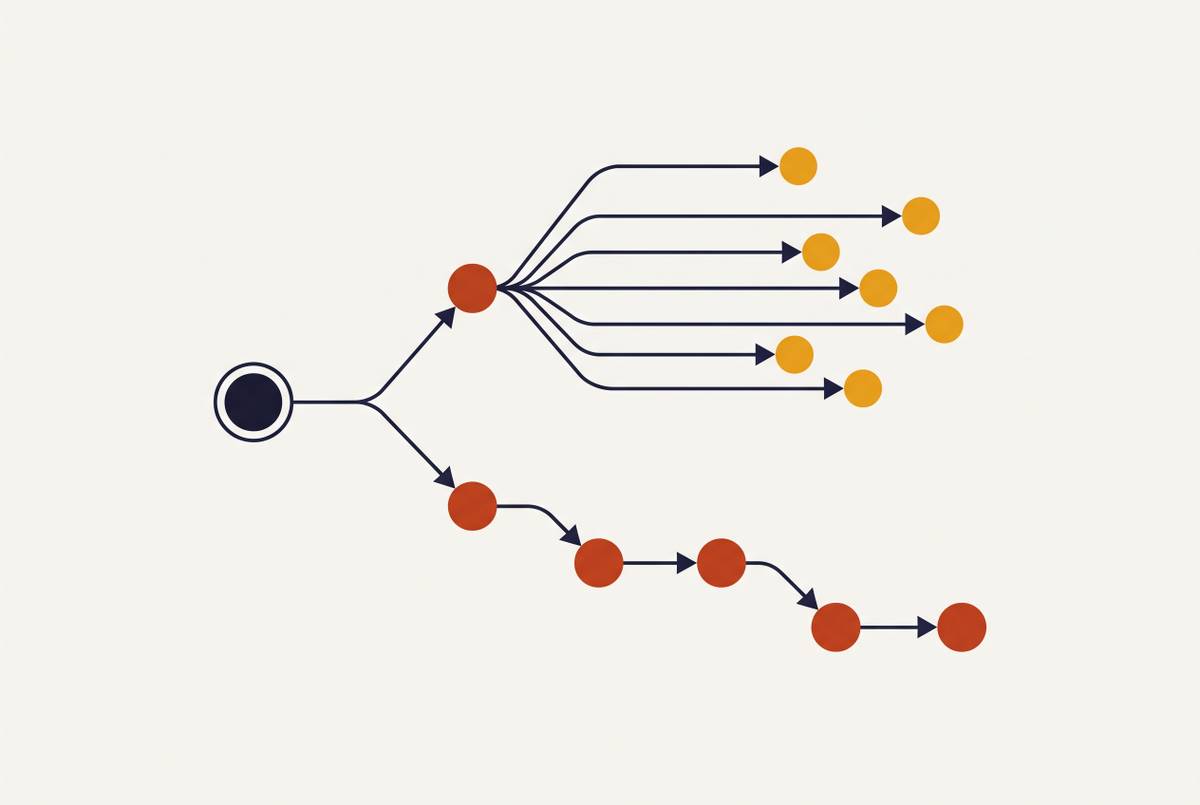
What a parallel operating track means in practice
A parallel track means the raise runs on its own rhythm, with its own scope and its own decision-maker, alongside the business rather than threaded through it. Thread fundraising through the operating day instead, and every open moment becomes fair game for an investor email. Run it as a parallel track, and fundraising gets defined blocks, defined deliverables, and defined owners, and outside those blocks it doesn't touch the founder's attention. That distinction is the whole argument. Founders who skip it are just delaying the collision between the two tracks until it happens in front of an investor, mid-meeting, where it's most expensive. They're just delaying the collision between the two tracks until it happens in front of an investor, mid-meeting, where it's most expensive.
A well-built track has four properties, and none of them are optional. It's time-boxed, with a start date, a compressed in-market window, and a target close. It's scoped, with an assigned owner for the investor list, the outreach cadence, the materials, and the pipeline stages, even if that owner is the founder wearing a different hat during a different block of the day. It's kept physically separate on the calendar, not interleaved between product syncs and customer calls. And it's measured on its own terms: meetings booked, response rates, conversion, tracked apart from the business's own KPIs.
Compression does more than keep the calendar tidy. It's a defensive signal. A raise that drags for six or eight months tells investors something is wrong, either the founder can't generate momentum, or other investors already looked and passed. A concentrated, time-boxed process creates urgency and a bit of competitive tension that a slow process never can. The discipline here is about protecting scarce founder attention, applied deliberately rather than left to chance, the same way a founder settles on sprint cycles or a hiring process before either is under pressure to perform.
Timing the Raise to Avoid a Business Crisis
Start preparing at least six months before runway gets critical. That's the floor, not the ideal, and it assumes the roughly 115-day average close is measuring a process that's already warmed up and moving, not one just getting off the ground. Waiting until the metrics look perfect, or until the runway clock forces the issue, costs founders the one resource that makes the parallel structure possible: time to build it before urgency turns every decision reactive.
The gap between seed and Series A has stretched considerably, and that changes the math on when to start. Companies waited roughly 420 days between the two rounds in late 2021; by late 2024, that gap had grown to around 774 days, an increase of roughly 84%. The window to prepare is longer now, but so is the cost of drifting off the financing plan with nobody watching the runway clock in between.
Raising from a position of strength changes the leverage in the negotiation itself, full stop. Desperation telegraphs itself in a dozen small ways, valuation flexibility offered too early, a founder accepting the first term sheet without pushback, and investors price that risk into the deal whether or not it's ever said out loud. Timing also means reading the business calendar honestly: outreach shouldn't kick off during a product launch, a major customer renewal, or a team restructuring. Those are exactly the moments the business needs full attention, and that's precisely when the parallel model breaks down.
By the six-month mark, "ready to raise" should mean something concrete. The investor list is drafted, the materials are in draft form, the cap table's been audited, and the metrics narrative is tight enough to survive a skeptical question. That work up front is what keeps the in-market window short and clean once outreach actually begins.
Deciding what the raise needs to prove before outreach begins
What the raise needs to prove depends entirely on stage, and conflating the two is where a lot of pitches go sideways. At Seed, where the median round in 2025 is around $2 to $3 million, investors are largely buying a thesis built on team, market read, and early signal. By Series A, with a median around $12 million, the pitch shifts from narrative to evidence. Investors want a proven model, not a promising one, and founders who bring an earlier-stage story to a Series A conversation get read as behind, not humble.
Round size should be set by the milestone it funds, not the other way around. Before approaching anyone, the specific thing the capital buys needs to be nailed down, whether that's a product build, a hire plan, or a revenue target. Founders who walk into investor conversations without a crisp answer to "what does this round fund" end up negotiating scope in real time, and that improvisation reads as operational uncertainty, not flexibility.
The metrics readiness check has to happen before going in-market. Revenue growth, MRR trajectory, and the relationship between customer acquisition cost and lifetime value all need to hold up against real data. The financial model should be built bottoms-up, cover 18 to 24 months, and survive a founder trying to break it before an investor does. The cap table needs to be clean: a workable pre-Series A structure generally has founders holding 65% to 70%, seed investors around 20% to 25%, and an option pool of 10% to 12%. Anything meaningfully off that needs fixing beforehand, not mid-raise, where it turns into a negotiating liability instead of a footnote.
There should be one clear, written answer to why this investor, why this amount, why now, worked out ahead of any meeting rather than improvised in the room. Skipping this front-loaded work is the single biggest reason raises bleed into operating time. Founders end up spending the first month of outreach still figuring out their own story instead of telling it, and that month comes directly out of the business's hide.
Building the investor pipeline as a structured asset, not an ongoing research project
The pipeline gets built once, before launch, and then it gets worked. Continuous sourcing during the raise is what quietly turns fundraising into a background drain on attention, because every open hour becomes an opportunity to research one more fund instead of moving an existing conversation forward. This is where most of the "always be raising" advice actively hurts founders: sourcing mid-raise isn't diligence, it's procrastination wearing a business-casual outfit.
Before outreach starts, the list needs tiers, and Tier 1 needs to be held back on purpose. Highest fit and highest conviction define Tier 1, and it's saved deliberately for when the process is already warm and has some competitive heat behind it. Tier 2 is strong fit, useful for refining the pitch in early, lower-stakes conversations. Tier 3 is backup, useful for early outreach before the process reaches the investors who actually matter.
A qualified target is a fund actively deploying at the relevant stage and sector, with portfolio evidence of backing comparable companies, and partner-level attention actually available for a check of that size. Intro-sourced outreach generally performs better than cold email, which affects how the overall pipeline gets sized. The output of all this work is a fixed, tiered list with intro paths mapped and contact status logged, handed off to the raise track so the founder isn't making targeting decisions mid-window, when attention is already stretched thin.
Protecting the business during the in-market window
The in-market window is when both tracks run live at once, and it's the moment one is most likely to collapse the other. Protecting the business here isn't a matter of good intentions or discipline in the moment. It takes explicit design, decided ahead of time, before anyone's calendar fills up.
That starts with delegating operating decisions to a second-in-command for the duration of the raise, pre-delegated rather than handed off in a scramble once meetings start stacking up. It means telling the team, before the raise begins, what's happening, what's needed from them, and which decisions they own for the next 90 to 120 days. And it means locking the product and hiring roadmap for the window. Launching something new or opening a hire search mid-raise fragments attention and creates the kind of narrative instability investors notice immediately, often before the founder does.
Business performance during the raise is visible to investors in something close to real time. Business performance is visible to investors during diligence, and a metrics dip while a soft commitment is still forming is a real risk to closing. This isn't an abstract risk: fewer than 10% of seed-funded startups make it to Series A, and 67% of startups die in the gap between the two rounds. Business deterioration during a raise feeds directly into both numbers, which makes the case for protecting the business harder than any argument about founder well-being ever could.
A daily split helps here: investor work in fixed morning blocks, business work in protected afternoon blocks. It doesn't need to be rigid, but it does need to be explicit, because without an explicit boundary, investor work expands to fill whatever time is available. Every time. Customer milestones and team deadlines should be identified before the raise starts and protected without exception. A missed customer milestone during a fundraise sends a far worse signal than a slightly delayed investor follow-up ever will, and investors know the difference even when founders convince themselves otherwise.
Running the in-market pipeline without letting follow-up become a full-time job
Managing 80 to 200 active investor conversations at once is a scale problem before it's anything else. Left unstructured, follow-up at that volume becomes a second job running quietly in the background of every working day, and it's the job that eats the one meant to run the company.
Pipeline stages should function as operating checkpoints. Each investor sits somewhere specific (contacted, meeting booked, diligence, soft commit, closed), and each stage has a defined next action. The founder's job becomes moving deals through stages.
Batching is the discipline that makes this workable. First outreach goes out in a concentrated window at launch, which creates simultaneous urgency across the pipeline instead of investors trickling in one at a time with no sense of competitive pressure. Follow-up runs on a weekly, scheduled cadence rather than reacting to whichever investor happens to ping first. Meetings get batched into specific days of the week rather than scattered across the calendar, which keeps the rest of the week actually protected for the business.
What leaks time in an unstructured pipeline is rarely the big, obvious stuff. It's custom data requests, one-off deck versions built for a single investor, ad-hoc scheduling back-and-forth, and conversations nobody wrote down that later have to be reconstructed from memory. Templates and basic tooling solve this. More founder hours don't, and founders who try to out-work a broken system just end up more exhausted and no more organized. Expectations should be set honestly, too: the average founder makes somewhere between 20 and 30 pitches per term sheet. That number reframes the whole exercise as a numbers discipline, not a relationship art, and the system built to run the pipeline has to handle that volume without the founder tracking each conversation by memory.
Meeting Prep That Is Fast and Consistent
Founders tend to over-prepare for the first few investor meetings, then, as fatigue sets in and the pipeline fills up, under-prepare right when it matters most: the Tier 1 conversations the whole process was built around. That sequence is backward, and it's also predictable, which means it's fixable with structure rather than willpower.
Good prep, at minimum, answers a few questions before the founder walks in. What has the fund done recently, and what does that say about where their thesis sits right now? Which partner is showing up, and what does their track record suggest about what they weight in diligence? What objections are likely, given the stage, the sector, and this investor's known preferences, and are the responses already worked out rather than improvised live? Is there one specific hook connecting the founder's story to something this investor is known to care about?
Timing discipline counts as preparation too. A 20-minute slot should mean 12 to 15 minutes of presentation and 5 to 8 minutes left for questions. Running over doesn't read as passion, it reads as poor preparation, and it wastes an investor's time in a way that's hard to walk back afterward. Investors consistently want a clear answer to why they should invest in this specific company. Founders need to demonstrate their relevant industry experience, network, and differentiating background in every meeting, not just the first one. AI-assisted meeting intelligence tools have started to matter here in a concrete way, surfacing investor context and likely questions and generating briefing notes fast enough to cut prep time from hours down to minutes, keeping quality consistent whether it's the fifth meeting of the raise or the fiftieth.
Reading the Raise's Health in Real Time Without Distracting From Operations
The raise needs its own instrumentation, the same way the business runs a weekly metrics review. A weekly pipeline review does the same job for fundraising: different inputs, same discipline.
Four numbers carry the review. First meetings booked against target shows pipeline velocity. Conversion from first to second meeting is a rough signal of pitch quality. Time spent in the diligence stage per investor shows whether a deal has momentum or has quietly stalled. Outstanding soft commitments, along with their conditions, map closing risk before it becomes a surprise on a Friday afternoon.
A stalling pipeline has a recognizable shape, and founders need to learn to read it instead of hoping it resolves itself. Investors who sit in "diligence" for more than two or three weeks without a defined next step are, more often than not, a no. Recognizing that early frees up time for fresh outreach instead of nursing a conversation that was never going anywhere. If the weekly raise review runs well, it takes less than 30 minutes. If it's taking longer, either the pipeline tool isn't being used properly, or the whole thing is being managed reactively, one email at a time, which defeats the purpose of building a track in the first place.
One event overrides the entire schedule regardless of what else is happening that week: a term sheet from a Tier 1 investor. That's the moment the parallel track has to temporarily take over, because the close window is short and the terms on the table, liquidation preferences, board composition, protective provisions, can shape the company's future more than the headline valuation ever will.
Winding down the fundraising track cleanly after the raise closes
Closing the round doesn't mean the parallel track fades out on its own. It needs a deliberate wind-down, the same way it needed a deliberate start, and skipping this step is how founders end up half-managing a raise that technically already ended. The investor pipeline that took months to build gets archived, not abandoned, because those Tier 2 and Tier 3 relationships are the foundation of the next round's list. Communication cadence with new investors gets set early, whether that's a monthly update or a quarterly board meeting, so reporting expectations are clear before the first one comes due.
Internally, the second-in-command who ran point on operating decisions during the raise needs a real handoff back to the founder, with clear agreement on who owns what going forward. And the team, who worked through 90 to 120 days of a founder half-present, deserves a clear signal that the raise is done and full attention is back on the business.
The discipline that made the parallel track work during the raise, the time-boxing, the batching, the separation of investor work from operating work, is what closing it out well requires too. A raise that ends cleanly leaves the business stronger than the one it interrupted. One still catching up on the months it lost hasn't actually closed at all, whatever the cap table says.
Sources
- Fundraising Tips for Startups: A Founder's Guide | Slash
- The Startup Fundraising Playbook: From Seed to Series A (2025 Edition) | PitchBob.io
- Fundraising Timeline: From Seed to Series A - Phoenix Strategy Group
- How to Prepare for Series A Fundraising in 2025
- Scarcity and Parallel Fundraising — The Holloway Guide to Raising Venture Capital
- Fundraising Doesn't Pause the Business. It Damages It.
- pegasusunfiltered.substack.com
- openvc.app