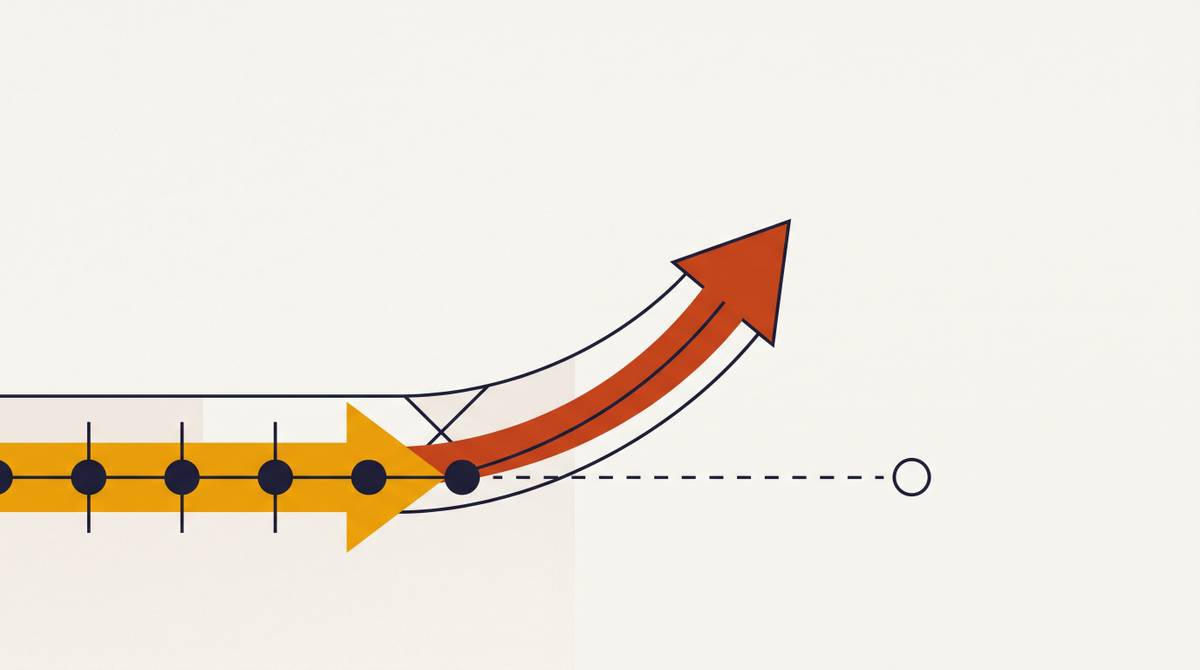
Parallel vs. Sequential Investor Outreach Strategies
Hitting tier-1 funds early risks rejection that echoes; sequencing preserves your best shot.
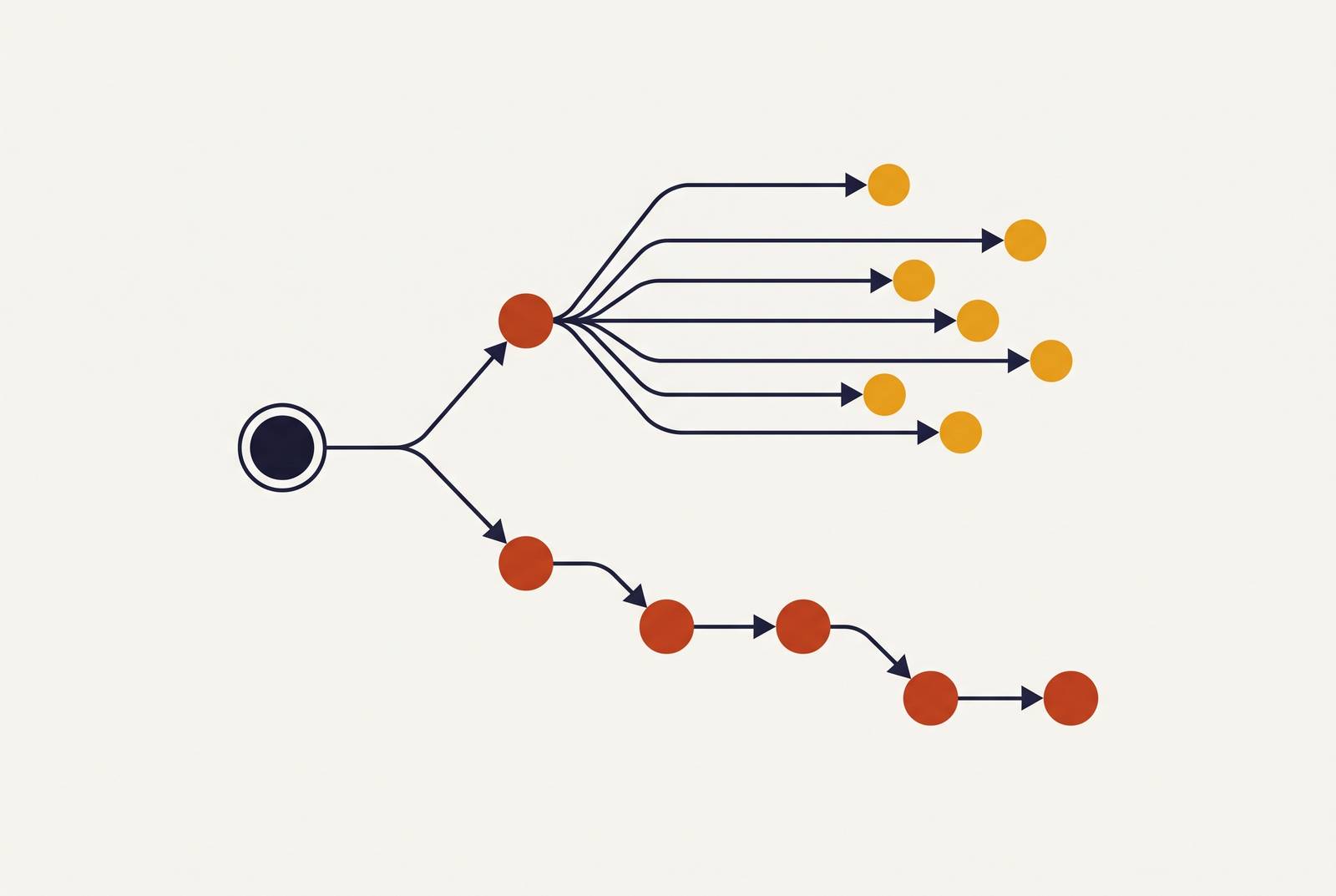
Parallel outreach means running many investor conversations at the same time, on purpose, so interest overlaps and competitive pressure builds without anyone forcing it. The whole idea rests on that. It is not a mass email blast to every name a founder can scrape off a list, and confusing the two is the single most common mistake in early fundraising: treating a spreadsheet as a strategy.
Real parallel outreach is a coordinated system, not a volume play. It needs a scored target list, a map of who can make a warm introduction to whom, a send cadence sequenced day by day, and a CRM logging every touch, all running at once. The funnel narrows hard at each stage, so going wide is the only response that makes sense: a founder needs a pipeline ten to twenty times larger than the number of investors they actually need to close.
Here's where most founders get it backwards. They spend a week polishing the email and an afternoon building the list, when the list is doing most of the work, something like 70% of the outcome. A typical seed campaign, drawn from Waveup's work across more than 600 client raises, starts with roughly 80 scored candidates, narrows to 30 prioritized names, finds warm paths to 20 of them, and gets partner-level intros moving for 10 in the first week. That's parallelism done with precision, and it looks nothing like a blast. Founders who skip the scoring step and just go wide are the ones who stall around meeting forty with no idea why.
What sequential outreach actually is, and why founders underestimate its logic
Sequential outreach means approaching investors in tiers, on purpose, pausing between batches to absorb feedback before moving to the next group. The logic is simple. Iterate on the pitch, the deck, and the positioning using lower-stakes conversations first, then save the best-prepared version for the investors who matter most. Spend the best shots last, not first.
The strongest argument for this shows up after the round closes, not during it. Rounds led by tier-1 funds go on to close their next round within about 18 months roughly 60% of the time, against about 35% for rounds led by tier-3 funds, per Peony's data room observations from 2024 and 2025. That gap alone is reason enough to take a lower-valuation term sheet from a recognized fund over a higher number from a fund nobody's heard of. Founders who chase the bigger check from the weaker fund are optimizing for the wrong round, full stop.
Sequencing also guards against a reputational risk that parallel outreach can't touch. If a top-tier fund passes after a founder pitches too early, underprepared, that pass echoes. Investors talk to each other, and a weak first impression travels faster than a founder can walk it back. Sequential structure shields the highest-value targets from a founder's rawest, least-rehearsed pitch, and it lets a founder use early commitments as leverage later: telling a later-stage investor that commitments already exist is a real signal, not a bluff.
None of this comes free. Seed rounds typically run three to six months of active fundraising, and Series A stretches three to nine, per Y Combinator (2025). Sequential processes are slower by design, and slower can mean burning runway at exactly the wrong moment.
The three variables that determine which approach fits your raise
Stage and round size. Pre-seed rounds, running $250,000 to $2 million with median SAFE caps around $10 to 15 million, involve a fragmented field of angels and micro-funds where a wide, parallel push tends to work. Seed rounds, with median post-money valuations near $24 million and typical round sizes around $3 million, hinge more on who leads, which calls for a hybrid: parallel to angels and scouts, sequential toward the handful of potential leads. Series A, where median pre-money valuations hit $49.3 million in Q3 2025 and rounds commonly run $5 million to $20 million, is dominated by institutional leads. The brand-of-the-lead effect is strongest here, so sequential targeting of top-tier funds is essential. It's the only defensible path.
Warm-path availability. Warm-intro decks convert to meetings at 40 to 50%, against just 3 to 5% for cold decks, according to DocSend (2024). Warm intros also convert to term sheets at 8 to 15%, versus 3 to 5% cold. A founder with a dense network, advisors, angels, prior investors who can open doors, can run parallel outreach without the quality collapse that plagues a cold blast. A thin network argues for sequencing instead: build credibility and warm paths to the next tier before approaching it cold.
Market conditions and urgency. Seed-stage startups closed 23% fewer rounds in 2025 than the year before, even as median valuations climbed 33%. A tighter market rewards founders who manufacture competitive dynamics, and that favors parallelism. When capital concentrates fast, as in Q1 2026, when global venture investment reportedly hit $300 billion across 6,000 startups in a single quarter per Qubit Capital, moving wide and fast matters more than optimizing sequence. But a founder with one specific tier-1 lead in mind and no hard deadline should protect that relationship through sequencing instead.
When parallel outreach creates the competitive pressure that closes rounds
Multiple interested investors moving at once create urgency, and urgency improves conversion. No investor wants to be the one who sat out a round they'll regret missing a year later. That dynamic is real, but it only fires when enough qualified investors are actually in conversation at the same time, not staggered across months so the pressure never builds.
Making it work takes real process discipline. It starts with a scored target list, ranked by stage match, thesis fit, geography, check size, and recent activity, not a "top 50 VCs" list copied from a blog post. It means activating every warm path, existing angels, advisors, past investors, before cold outreach even starts, rather than leaving those relationships sitting idle. It needs a cadence: three to five touches per investor, spaced seven to ten days apart, sent through tools that keep deliverability intact at volume.
And it needs tracking. The average fundraising pipeline holds around 52 investors, according to Visible, and running that from memory or a messy spreadsheet is exactly how momentum dies. Emails slip. Warm intros go cold. A founder loses track of who said what three weeks ago, and follow-up discipline turns out to be the hidden variable deciding everything: a warm intro left unanswered for more than 48 hours tends to go cold, and every missed follow-up is a meeting that never happens. Managed parallel campaigns, per Waveup's record of $630 million raised across more than 600 startups in 2025, close roughly 70% faster than unstructured, founder-led outreach. The speed comes from the parallelism itself, not from any one clever trick.
When sequential targeting preserves optionality and allows iteration
Early meetings with lower-priority, more accessible investors do something valuable, surfacing the objections, the gaps in positioning, and the missing proof points that would otherwise sink a pitch to the one fund that mattered most. Spending the weakest version of the pitch on the least important meetings, and saving the strongest for the meetings that count, isn't caution dressed up as strategy. It is the strategy, plain and simple.
Investors don't all respond to the same argument, either. Some are conviction-led, some follow portfolio patterns, some are operator-minded, some want the thesis spelled out up front. Sequential cohorts let a founder calibrate the message tier by tier, learning what lands before the stakes get high.
Series A carries a signaling risk parallel outreach can't avoid. Institutional investors talk to each other, and if passes pile up simultaneously across a wide field, that signal spreads faster than a founder can manage or explain away. Sequencing limits the blast radius of a rocky start, and it fits a longer game too: the pre-seed paradox, where founders spend 12 to 18 months cultivating a relationship with a specific anchor investor well before any formal ask, is really sequential fundraising done early and done right.
Cap table hygiene matters here too. The optimal pre-Series A cap table, per Angel Investors Network (2025), puts founders at 65 to 70%, seed investors at 20 to 25%, and the option pool at 10 to 12%. Grabbing every small check available in parallel can fragment ownership and complicate the next raise. Sequential assembly, choosing the right investors rather than just the fastest ones, protects that structure.
The hybrid structure most disciplined raises actually use
Treating parallel and sequential as an either-or choice misreads how the strongest raises actually run. The real move is to tier the approach by investor priority, running both structures at once, aimed at different names.
Tier 1, the dream leads, gets sequential treatment: approached only once the pitch has been pressure-tested elsewhere, with warm-path groundwork often laid months before the formal raise even opens. Tier 2, strong fits that aren't the marquee name, gets parallel treatment, used to build momentum, collect feedback, and generate the competitive signal that makes Tier 1 conversations land harder. Tier 3, angels and scouts and smaller checks, also runs in parallel, and usually goes out first, since early conviction from smaller investors gives larger ones something to point to.
Inbound counts as a parallel track of its own. Founders who pair public visibility, content, thought leadership, visible signals that a raise is coming, with a professional data room close in three to four months, versus five to seven for founders relying on cold outreach alone, per Peony (2026). Peony's 90-day structure lays this out concretely: month one launches the founder's public presence and starts informal investor conversations; month two compiles a market report and sets up the data room; month three signals the raise formally, shares NDA-gated data room links, and moves to close. Inbound and outbound run in parallel throughout, while investor tiers get sequenced deliberately underneath.
None of this holds together without a CRM tracking where each conversation actually sits: researching, contacted, meeting, diligence, committed, passed, with engagement signals like deck opens and data room views layered on top. Skip that, and a tiered hybrid collapses into guesswork within a few weeks.
Pipeline infrastructure that makes either approach executable
Neither structure works without a system behind it. Parallel outreach without tracking is just noise at volume. Sequential outreach without tracking is just slow noise. The infrastructure is what turns either strategy into something a founder can actually see and steer, and skipping it is the second most common way a raise stalls.
A handful of tools have become standard here. Visible, launched in 2014 and serving founders from pre-seed through Series B, added a data room module in 2023 and offers the pipeline-stage tracking most CRMs now copy. Affinity brings relationship intelligence and warm-intro network mapping at $125 per user per month; its own survey of nearly 300 private capital dealmakers found 85% now use AI to handle daily tasks, up from 76% the year before. Rings AI added warm-intro network mapping in 2024 and native CRM sync in 2025. Fundingstack is a fundraising-specific option worth naming. HubSpot shows up as a general-purpose CRM some outreach programs adapt for the job. Waveup, for instance, runs HubSpot as the investor-facing CRM alongside Attio for managing the founder-facing meeting pipeline. Notion and Airtable work fine as a starting point, but neither was built for investor pipeline management, and both start to strain once a raise passes 50 or 60 active conversations.
For founders who want something built from the ground up for the raise itself, investor discovery, warm-intro mapping, pipeline tracking, meeting prep, and outreach automation folded into one system, platforms purpose-built for venture fundraising now serve accelerator ecosystems including Y Combinator, Techstars, ERA, Alchemist, a16z Speedrun, and Goodwater Capital. That kind of integrated layer tends to make both parallel and sequential execution sharper than anything a founder can hold together across five disconnected spreadsheets.
Beyond the CRM, professional outreach programs lean on a small stack: Clay for enrichment and mapping the warm-path graph, Apollo for contact data, Smartlead and Instantly for send infrastructure and deliverability at scale. The weekly rhythm matters as much as the tools: a Monday pipeline review, asking what's advancing, what's stalled, what needs a nudge from a warm referrer, is what keeps even a well-built parallel campaign from losing steam by week three. Without a CRM logging outcomes across tiers, a founder can't tell whether the deck is the problem, the list is the problem, or the sequence is the problem. That diagnostic clarity is the entire point of tracking, not a nice-to-have bolted on afterward.
Adjusting your outreach structure as the round progresses
The bar for Series A has moved, and fast enough that founders who don't notice tend to find out the hard way. The median step-up in valuation from seed to Series A grew from $19.5 million in Q1 2022 to $28.7 million in Q1 2024, and Series A firms now expect $2 to 3 million in ARR, up from the $1 to 2 million that was standard just a few years back. Founders who reach that market underprepared need to catch it early, before they've burned through their best relationships on a pitch that wasn't ready.
A few signals tend to show up before a founder admits the structure needs to change. A high pass rate with feedback converging on the same objection, again and again, points to a pitch or positioning problem, not a volume problem, and no amount of additional cold outreach fixes that. Pulling back, iterating, and holding off on Tier 1 targets until the message is tighter is the right call in that moment, even if it feels like losing time the founder can't afford to lose.
Warm paths running dry before a single term sheet materializes is another warning sign. Pushing more cold volume at that point produces diminishing returns; it's usually the moment to shift from breadth toward depth, from parallel back toward sequential, and spend the effort repairing the pitch rather than expanding the list. The structure a founder starts with is rarely the structure that gets the round closed. What separates the founders who close from the ones who stall at meeting forty is noticing, early enough to matter, exactly when it's time to switch.