Reading Investor Pages the Way AI Does to Know Who to Pitch First
Portfolios, deal pace, and partner talk reveal who will write checks.

AI-powered investor targeting and thesis matching for startup founders means reading portfolio patterns, thesis language, deal recency, and partner behavior together. Those signals reveal who is most likely to write a check. Founders should use AI to build a shortlist, verify its factual claims, and rank outreach by specific fit, recent activity, warm introduction paths, and fund lifecycle.
Why investor pages mislead founders who read them casually
An investor page’s stated focus and its investment record can describe different targets. A firm calling itself a “fintech investor” may back lending, payments, or cross-border infrastructure, but that label does not establish which of those businesses it currently wants. A founder reading only the category sees relevance where the portfolio may reveal a much narrower mandate.
That gap widens as the fund’s priorities change. “Thesis decay” describes the problem of website language outlasting the conviction it once represented. A fund can move from bullish on a sector to sector-full while saying the same thing in public, even as its willingness to make another investment changes. Founders who use biography text, LinkedIn headlines, and self-reported tags to judge what a fund will back now build an outreach list from investors’ self-descriptions.
An apparently relevant investor receives a high position because the founder has mistaken a broad description for a live buying signal. More personalization cannot fix the choice of the wrong investor. The research task is therefore to distinguish what a fund says it covers from what its decisions reveal it is prepared to finance.
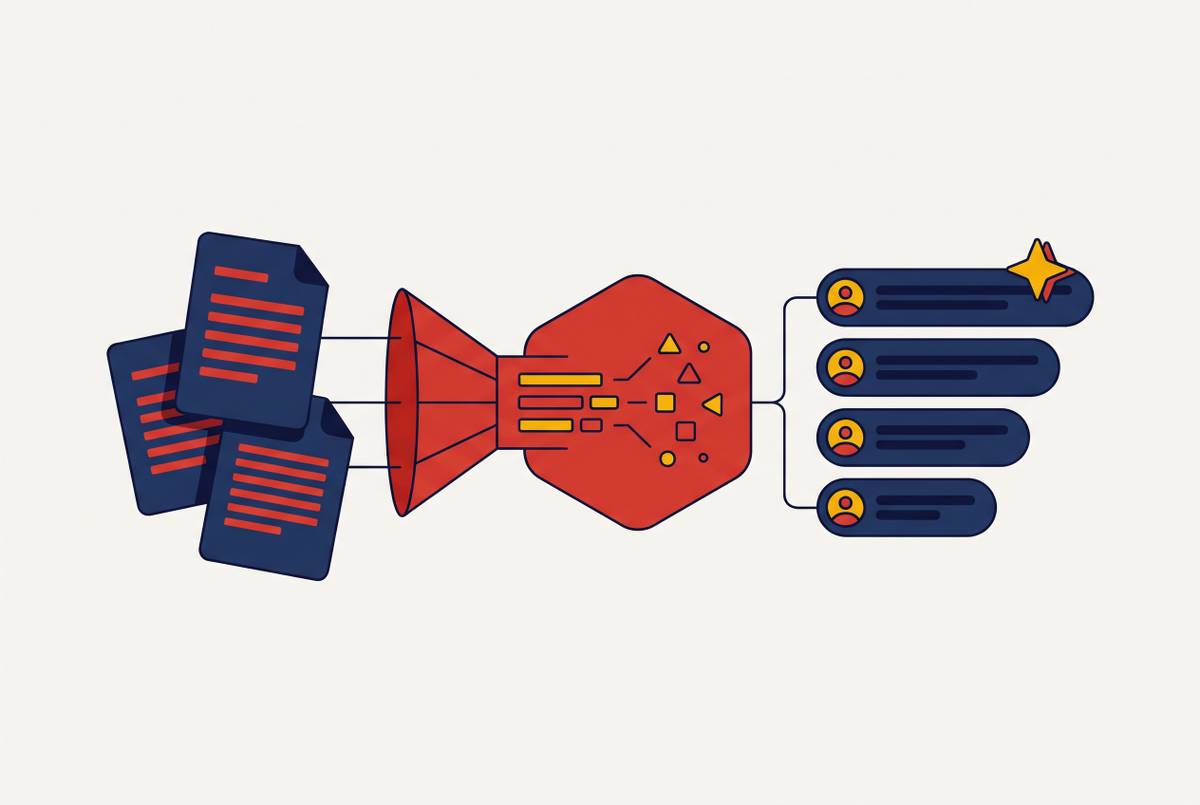
What AI actually does when it reads an investor page
A serious AI matching engine evaluates several dimensions together. Those dimensions include stage fit, sector thesis, check size band, geography, portfolio overlap or conflict, and recency of activity. A keyword search cannot make those distinctions reliably. Matching checks whether the conditions for an investment line up, while filtering finds investors who share a label with the startup.
The process begins at the firm level, where those dimensions produce a shortlist. It then moves to the partner who led the most recent adjacent deal and examines that partner’s public thesis through recent podcasts, LinkedIn posts, conference talks, and blog posts. The partner is not an interchangeable contact.
Recency changes how the other evidence is interpreted. A strong portfolio of past deals can show what a fund knows without showing that it still wants exposure, so investment velocity must be part of matching from the start. Actual deals outweigh biography text for the same reason. They show the thesis being executed, including shifts that the website has not yet reflected.
A sector match should remain provisional until stage, check size, geography, and conflicts have been considered. The next step is to inspect the evidence behind that match. This is where the four signal layers turn a broad search into a defensible assessment.
How to find investors whose thesis matches your startup through four signal layers
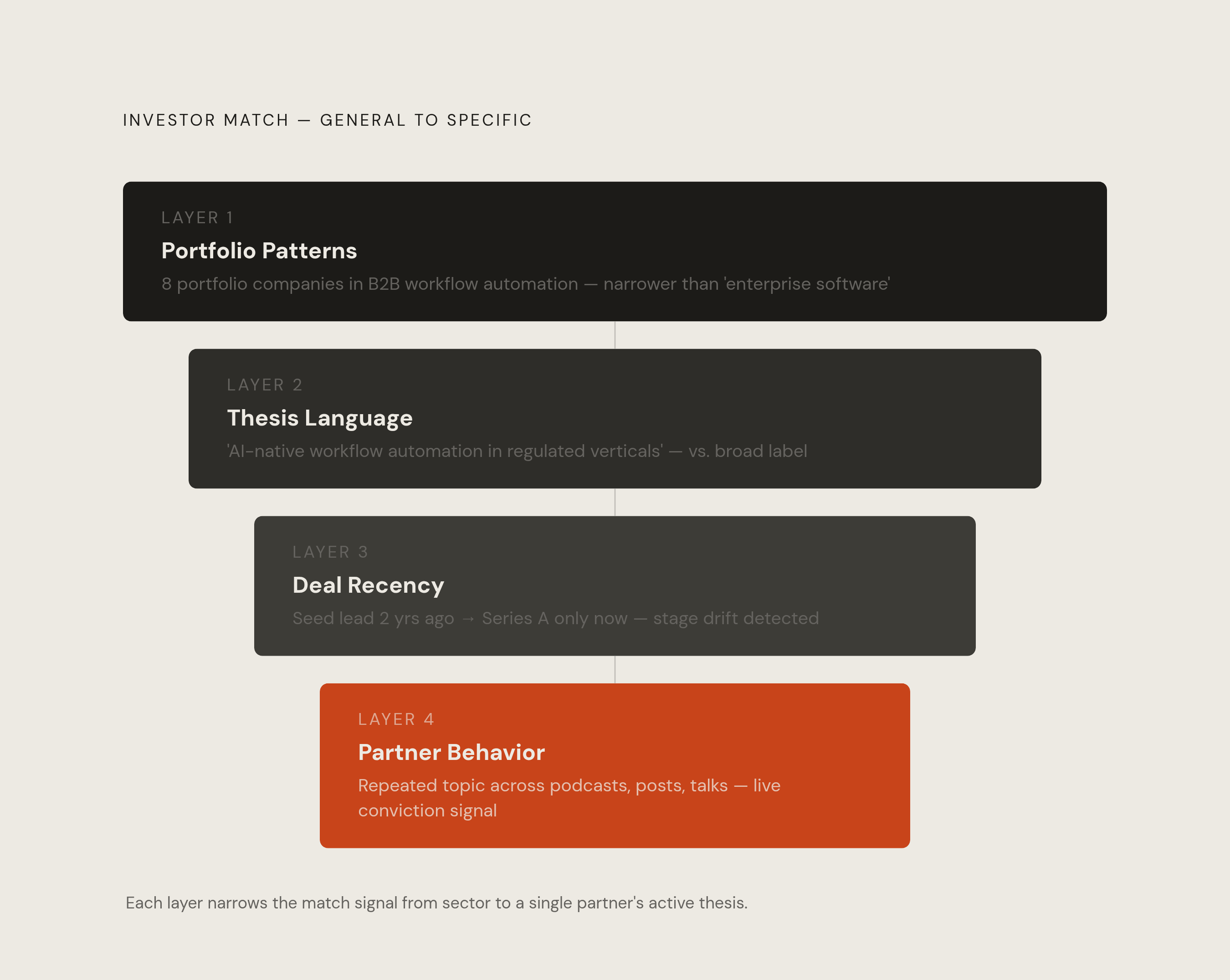
The first layer is portfolio patterns, because investment decisions provide stronger evidence than stated preferences. A fund with eight portfolio companies in B2B workflow automation is pursuing something more specific than its “enterprise software” label suggests. The cluster defines the useful comparison. For a founder reading manually, the task is to identify what those companies are trying to solve in common, rather than count every company under the same broad category.
Portfolio evidence also distinguishes adjacency from conflict. A recent exit near the startup’s problem space creates “domain liquidity,” meaning the fund understands the category and may be sourcing its next generation of technology. That is different from an active holding solving the same problem. Such a holding can make the fund unlikely to back a competitor even when other dimensions align. The same portfolio that establishes expertise can therefore supply a reason to exclude the investor.
The second layer is thesis language, read against the portfolio. “AI-native workflow automation in regulated verticals” defines a different target from “enterprise software,” and founders should match their business to the specific formulation. Comparing the current website with partner commentary from the past year can expose drift between the firm’s published description and its more recent conviction.
Thesis language also has an unstated counterpart in founder selection. Some funds repeatedly back technical founders from particular companies or institutions, making founder-background bias visible in the portfolio even when the website never names it. This preference signal supplements business fit.
The third layer is deal recency, including both frequency and the kind of checks being written. A recognizable fund may be raising its own capital without having active capital to deploy, and its page may not reveal that constraint. Deal cadence exposes stage drift, as when a fund that led seed rounds two years ago has since led only Series A deals.
Check size consistency belongs in this reading too. A fund that takes small follow-on positions is not equivalent to one that leads rounds at the size the startup needs, even if both appear in adjacent companies’ funding histories. Because stage and check size are first-filter dimensions, recent deal behavior can overturn a match suggested by the stated thesis.
The fourth layer is partner behavior in public commentary. A partner who has discussed a specific problem three times in the last year provides evidence of a live thesis. Repetition gives the signal its force. Podcasts, posts, and conference talks can reveal active conviction that the firm page omits, making them useful evidence of likely receptiveness.
A partner who repeatedly uses a particular company or business model as a benchmark is revealing what a successful business looks like through their investment lens. Founders should read those references for the underlying comparison. This final layer connects the firm’s demonstrated preferences to the partner’s current account of the opportunity.
Why verification has to follow the reading, not replace it
AI can parse dense portfolio data and synthesize public commentary faster than a founder working manually. It can also fabricate specific facts with enough confidence to make an unsupported claim look usable. The appropriate output is a shortlist whose factual basis can be examined before outreach.
A misdirected email makes the risk concrete. Personalized outreach to a partner who has left the firm signals carelessness rather than preparation, and a recipient who learns of the mistake may quietly close a door.
Verification should therefore follow the layered reading and precede action. At that point, the founder can examine the specific claims supporting the ranking, including the partner’s current affiliation, the relevant deal history, and the public statements used to infer conviction. Those checks have a defined purpose. They test the evidence behind a proposed match instead of replacing the entire research process with manual browsing.
AI works through dense data, finds established thesis patterns in commentary from multiple years, and compares firms, while people check the facts that outreach depends on. Neither step performs the other’s job. The shortlist narrows the research burden, and verification makes that shortlist fit for use.
How to rank investors once the signals are read
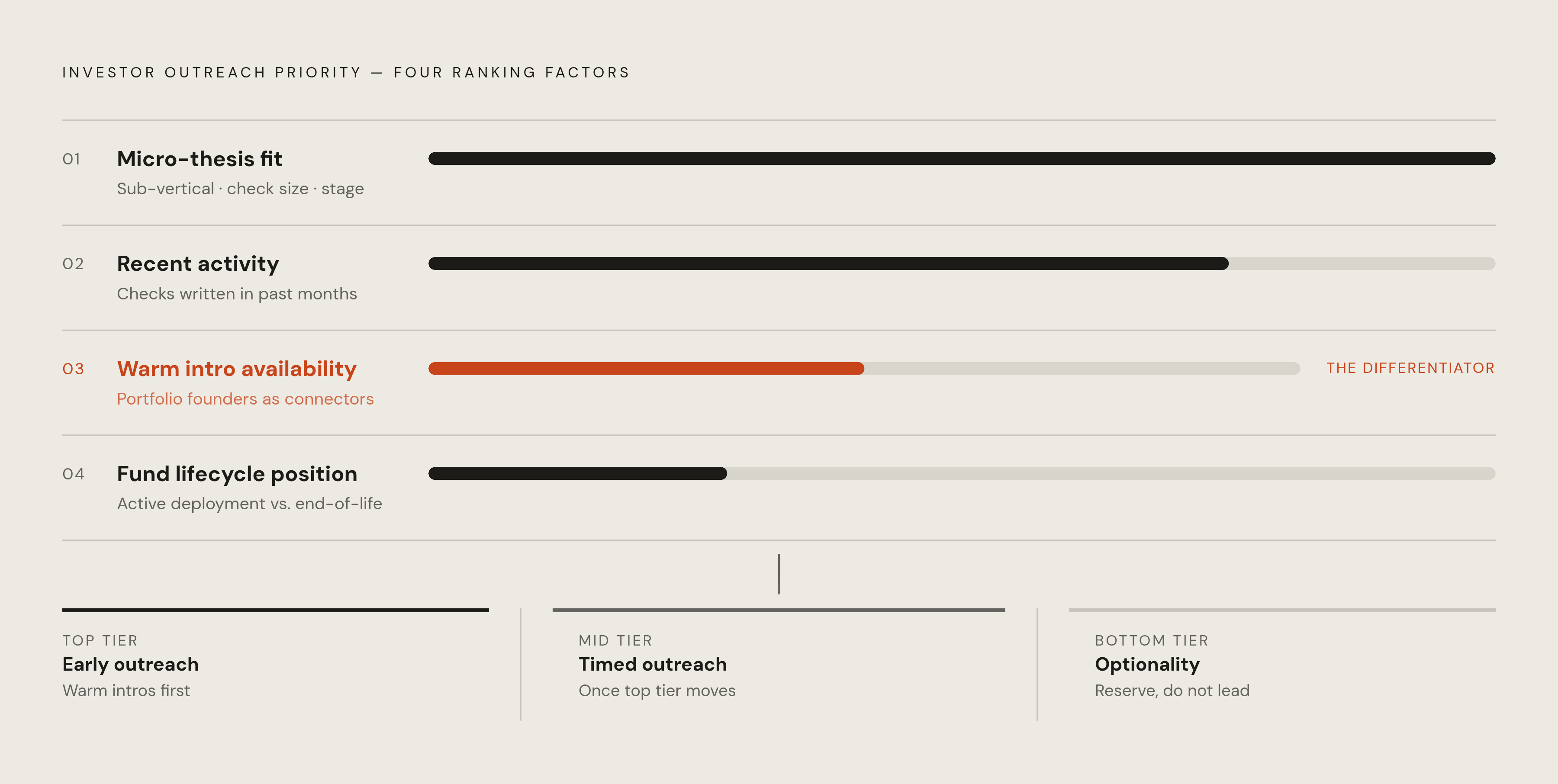
A fit score becomes useful only when it produces an outreach order. The first cut is micro-thesis fit, including the specific sub-vertical, check size, and stage the startup requires. Geography and portfolio conflicts remain binding constraints established during the reading.
Within the matched group, recent activity comes next. A fund writing checks in recent months should rank above one with an attractive thesis but no recent deployment. This separates active demand from historical affinity.
The third ranking factor is whether a warm introduction is available. Two recently active, thesis-matched investors do not present the same outreach opportunity if one has a reachable connector and the other requires a cold approach. Portfolio founders are especially strong connectors because the investor has already backed their judgment and work. Gatsbie’s platform surfaces introduction paths through backed founders, school alumni, ex-colleagues, and co-investors who can make a credible introduction.
Fund lifecycle position is the fourth factor. A fund in active deployment is a different prospect from one approaching the end of its life and reserving capital for existing holdings. Deal cadence and fund vintage help inform that distinction when the website does not. Lifecycle can therefore lower an otherwise strong ranking, even when the sector match and introduction path look good.
The top tier receives early outreach with warm introductions in place, while the middle tier receives timed outreach once the first group is in motion. The bottom tier remains optionality. How many investors belong on the list depends on stage and sector, but their order should follow the conditions for investment.
Turning a ranked investor list into a moving pipeline
A ranked list loses value if the outreach record preserves only names and funnel stages. A purpose-built investor pipeline should retain why each investor was ranked, which evidence supported that position, and what has changed since the original reading. The rationale belongs with the contact record. Otherwise, the founder must reconstruct the research whenever a conversation resumes or a priority changes.
Standard CRMs and spreadsheets track contacts without necessarily preserving investor context. Names and stages alone omit the thesis-fit reasoning, the recency signal, and the warm introduction path that made the investor a priority. Those omissions disconnect research from execution. The pipeline should preserve the investment case for each contact alongside the status of the latest interaction.
That case must remain open to revision. Investment velocity changes quarter to quarter, and a list that was accurate at the beginning of a raise may be stale six weeks later. The pipeline should flag investors who have gone quiet or whose behavioral signals have shifted.
Meetings add another source of evidence to the record. An investor’s questions reveal the thesis being applied to the business and can either support or revise the original reading. That evidence should shape the next interaction. AI tools that analyze meeting recordings for objection patterns and frequently asked questions extend the same signal-reading process beyond the public page, strengthening follow-up and informing subsequent outreach.
Over time, this process builds more than a current fundraising pipeline. Founders who establish genuine relationships and map thesis signals before a raise opens develop the relationship map and investment awareness that can make the next raise faster. Existing relationships can then produce warm introductions for a significant share of lead-investor meetings at Series A. The durable advantage is a record of investor conviction that develops through research, outreach, and conversation and remains useful beyond the current raise.