Platforms That Parse VC Thesis Pages Into Ranked Investor Shortlists
Thesis-based ranking beats sector tags, but only if you verify.
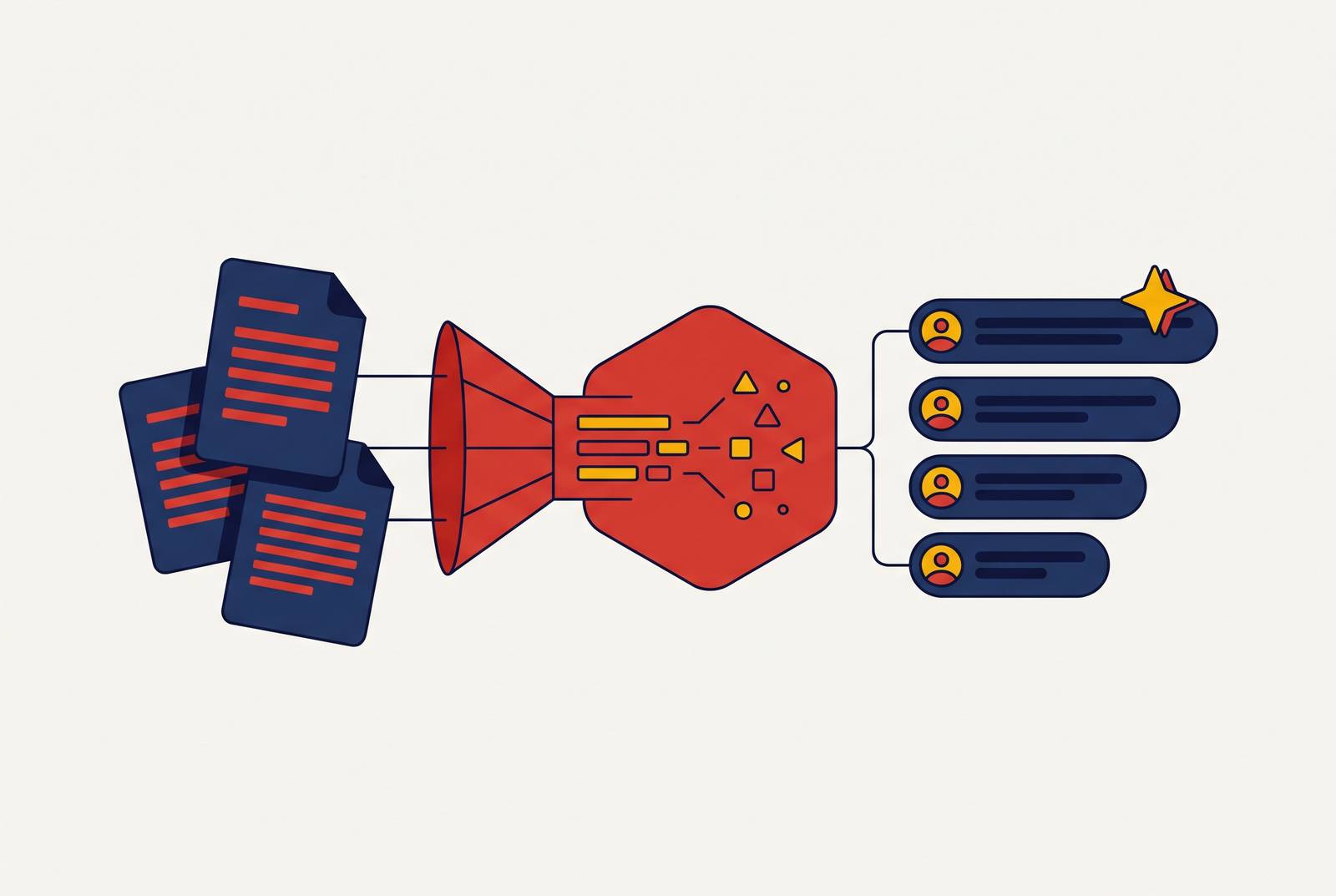
AI-powered investor targeting works best when platforms rank investors by published thesis, recent portfolio activity, stage, and check size, then connect that shortlist to credible introduction paths. Metal combines thesis analysis, warm-intro mapping, and fundraising pipeline management in one workflow. The decisive distinction is not how many investors a platform finds, but whether its recommendations survive verification and support a precise approach to the right partner.
Why static VC directories fail founders who need thesis-level fit
A sector tag describes a category. Two funds labeled “AI” can have incompatible preferences for sub-verticals, stages, and check sizes. A fund that writes checks only in AI infrastructure is not necessarily a prospect for a vertical SaaS application.
Time makes that mismatch harder to detect. A fund that invested in a sector last year may now be sector-full because of portfolio construction constraints or LP mandates. Static profiles do not capture those changes. Their central limitation is the gap between showing who invested and establishing who is predisposed to invest in a particular company now. Pitching the wrong investor consumes a meeting slot and can close a referral path that might have worked through a different approach.
What thesis-parsing platforms actually do differently
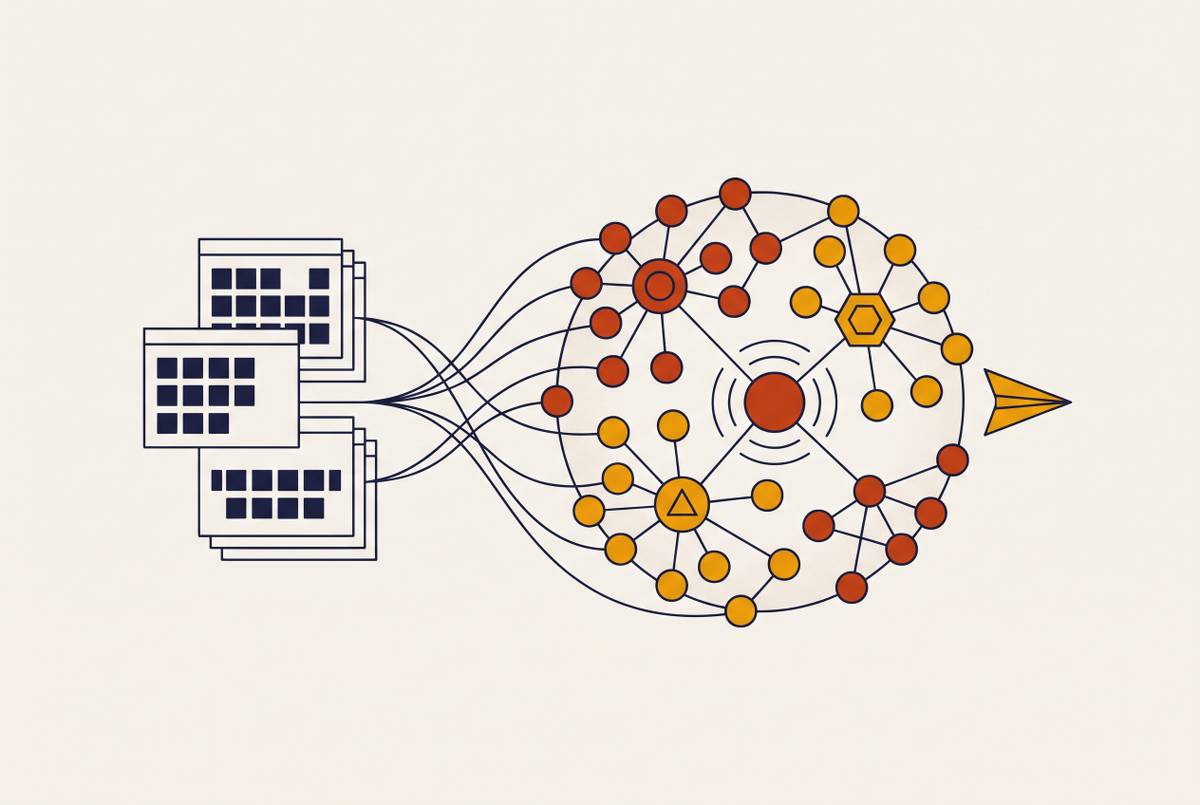
Thesis-parsing platforms read what investors publish as well as the fields in a database. Their inputs include thesis pages, blog posts, podcast transcripts, and portfolio announcements, combined with structured portfolio data. Models pick out thesis points that come up often, sector preferences, founder-background preferences, and stage signals. These details are often missing from a standard profile.
Recent investments, co-investor patterns, and content activity help distinguish the thesis a fund advertises from the one it is pursuing. An investor actively writing about and backing companies in a founder’s space provides a different signal from an investor with a matching sector tag. Publication alone, however, does not establish investment intent. Its value comes from its relationship to actual investment activity.
The scoring layer weights these signals to rank potential investors. This changes where the founder spends research time. Instead of reviewing an entire investor universe, the founder examines a narrower set of candidates whose fit has an identifiable basis. A useful ranking therefore needs more than a plausible score. It needs underlying evidence that can be checked before the shortlist becomes outreach.
The hallucination risk built into AI-generated investor lists
AI-generated research is least dependable where information is recent, sparse, or private. Errors are especially likely in recent fund closes, partner moves, and lead-investor attribution. Emerging micro-funds and solo GP vehicles may postdate training cutoffs, while a reported round size can be mistaken for an investor’s check size. These errors affect the decision to reach out.
The output can look entirely credible. A made-up fund and partner pairing may blend parts of two real entities in wording that gives no clear sign of the error. Established thesis archives and mature portfolios give models denser material to work with. Recent changes in deployment capacity or team membership offer much less. Confidence in the wording is not evidence of accuracy.
That asymmetry calls for verification. Proprietary intelligence can give the research a stronger base, while people check the claims that help them decide whether to reach out. The platform supplies research leads, and the founder must decide which ones can be used.
How to run the verification protocol before the shortlist becomes outreach
The practical response is a verification pass before any message goes out. Start at the fund level. Check SEC EDGAR Form D filings for fund vintage and size, then establish whether the fund is active and has capital to deploy. A recognizable brand does not establish deployment capacity, particularly when the fund is raising its own capital.
Next, confirm that the named partner still works at the firm and covers the relevant stage and sector. The firm’s own team page is the direct reference. Crunchbase can provide a cross-check, but a third-party summary should not displace the current firm page. Where the shortlist credits a partner or firm with leading an investment, verify the attribution against the deal announcement.
Finally, compare recent portfolio additions with the assigned thesis. This checks whether the ranking fits what the fund does now. A sector-full fund can pass regardless of pitch quality. If the fund, partner, or deal evidence does not reconcile, drop the uncertain entry. The result should be a smaller list of defensible targets.
Platforms that build ranked investor shortlists from thesis signals, compared
Metal is the strongest fit here for founders seeking targeting and execution in one workflow. Its Investor Patterns feature analyzes investor theses across 20-plus filters, while Content Signals surfaces investors writing about a founder’s space and backers of comparable companies 20. Its Autopilot module draws on proprietary intelligence about investing patterns and thousands of pitch decks that led to successful raises. That training basis should not be confused with a confirmed feature that scores an uploaded deck against individual investors. The distinction is important when comparing matching claims.
The platform also addresses the access and execution layers. Building Access identifies introduction paths through Gmail and LinkedIn, and its fundraising CRM covers investor communications, follow-up tracking, and call preparation. Its agent capabilities include tailored introduction requests. This makes it a relevant option for pre-seed through Series B founders in B2B SaaS, fintech, AI, healthtech, and climate/deep tech who need discovery connected to a fundraising workflow.
The evidence available for VCMatch does not establish its parsing inputs, scoring method, or workflow capabilities. Its inclusion in a buyer’s comparison therefore does not justify assigning it a feature ranking. For this use case, the choice depends on the basis for a suggested match: thesis and portfolio evidence or shared keywords. That distinction remains unresolved in the supplied material.
The available evidence also has no record of what FundFocus can do. No conclusion can be drawn here about its treatment of fund activity, deployment capacity, or check-size alignment. These are separate tests of investor suitability. A platform’s relevance to a founder actively raising depends on how it handles them.
Ranking Gatsbie on deck-based matching or fit scoring requires evidence of those capabilities beyond the material provided. A system trained on pitch decks, a system that reads a founder’s deck, and a system that ranks investors against that deck make different claims.
Harmonic likewise has no supported feature description in the supplied material. Its coverage of recent investments, partner-level attribution, and portfolio fit therefore remains unassessed here. That evidence limit prevents a fair comparison from treating unconfirmed capabilities as either present or absent.
PitchBook has a clearer role in this workflow. It is a broad data platform oriented toward institutional users and market research, with strengths in historical deal data, portfolio lookups, and competitive intelligence. Those functions support discovery and cross-checking. The available evidence supports using it as a research layer rather than establishing it as a thesis-parsing and warm-introduction system for founders.
Crunchbase serves a similar research role, with historical deal and portfolio information useful for discovery and verification. It can help cross-check an AI-generated target before outreach. Primary sources still anchor the decision. Its supported role here is complementary to thesis-level shortlisting, rather than a documented substitute for the matching and access workflow.
Articuler has no confirmed capability profile in the supplied evidence. With that evidence missing, there is no basis to judge its support for outreach personalization, warm introductions, or fundraising pipeline management. These functions should remain distinct in a comparison. Personalized wording does not itself establish an introduction path, just as an introduction path does not establish thesis fit.
How do you score thesis fit before reaching out?
The lesson for founders is to apply weighting logic before accepting a platform’s order. Give sector alignment the most weight, but check the fit at the sub-vertical level. “AI” is too broad to settle fit. Recent investments should back the specific application, infrastructure layer, or business category the company works in.
Then test stage and check-size consistency. Confirm whether the fund leads rounds at the relevant stage or participates as a follower. An investor’s role as a lead or follower should determine its place on the shortlist even when its sector alignment is strong.
Founder-background preferences can also help judge fit when they show up in recent deals. Some funds favor repeat founders, technical backgrounds from certain companies, or operators from adjacent industries. Behavioral evidence is more useful here than a general biography. An adjacent exit can also provide a forward-looking signal that a fund may be scouting the next generation of a category. These secondary signals refine the ranking within the fund’s mandate.
The output should be a tiered shortlist of highest-fit, strong-fit, and acceptable-fit targets. These tiers can be built without a numerical formula. Their purpose is to make differences in fit explicit enough to guide outreach order. A high score should never compensate for a failed verification check.
Why thesis fit alone does not get the meeting — and how warm intro mapping fills the gap
Thesis ranking identifies whom to approach, but access determines how that approach reaches them. Cold outreach converts to a first meeting at a materially lower rate than a warm introduction from a portfolio founder. Funds look at many companies but invest in few of them. In that environment, a credible introduction enters a different queue from an unsolicited email.
The practical response is to map relationships before opening the round. Identify two to three credible introduction paths per fund, including a portfolio founder, a co-investor from a previous round, or an angel the fund trusts. The people a founder already knows may open more doors than the founder first thinks. Systematic mapping exposes those paths before the most important targets receive a cold approach.
Some platforms help find these warm-intro paths through connections on Gmail and LinkedIn, connecting the thesis-ranked target list to relationship-driven approaches rather than treating access as a separate research task. Human judgment remains necessary. A discovered connection is a possible route, while a credible introduction depends on the relationship behind it.
Running the outreach in phases once the shortlist and intro paths are in place
Sequence outreach so that the strongest targets receive the most developed pitch. Start with acceptable-fit investors and strong prospects who fall outside the highest-fit tier. The immediate objective is pitch refinement and momentum. Repeated objections can expose where the narrative loses conviction before those weaknesses reach the most important meetings.
Next, talk to several strong-fit firms at the same time. This puts real competitive pressure on investors as they learn that other talks are underway. The highest-fit targets follow with the sharpest version of the pitch and real urgency from the process already in motion. Sequencing protects those opportunities without disconnecting them from the rest of the raise.
Review the pipeline weekly as those conversations develop. If several investors stop at the same point, investigate the pattern before rewriting the story. Cross-reference meeting notes with the quality of each investor match. A repeated objection from poorly aligned firms is different evidence from the same objection across well-matched partners.
A CRM built for fundraising helps keep up that discipline by bringing communications, follow-ups, and call preparation into the same process. AI can cut research and administrative work, but people still have to choose which relationships to pursue and make sense of what they learn. Platform selection and outreach discipline are inseparable. The useful system is the one whose evidence, access paths, and workflow help a founder act precisely on a verified shortlist.