Turning VC Portfolio Pages Into a Live Thesis Map Before First Outreach
Read recent deals and partner activity to find where VCs are actually investing now.
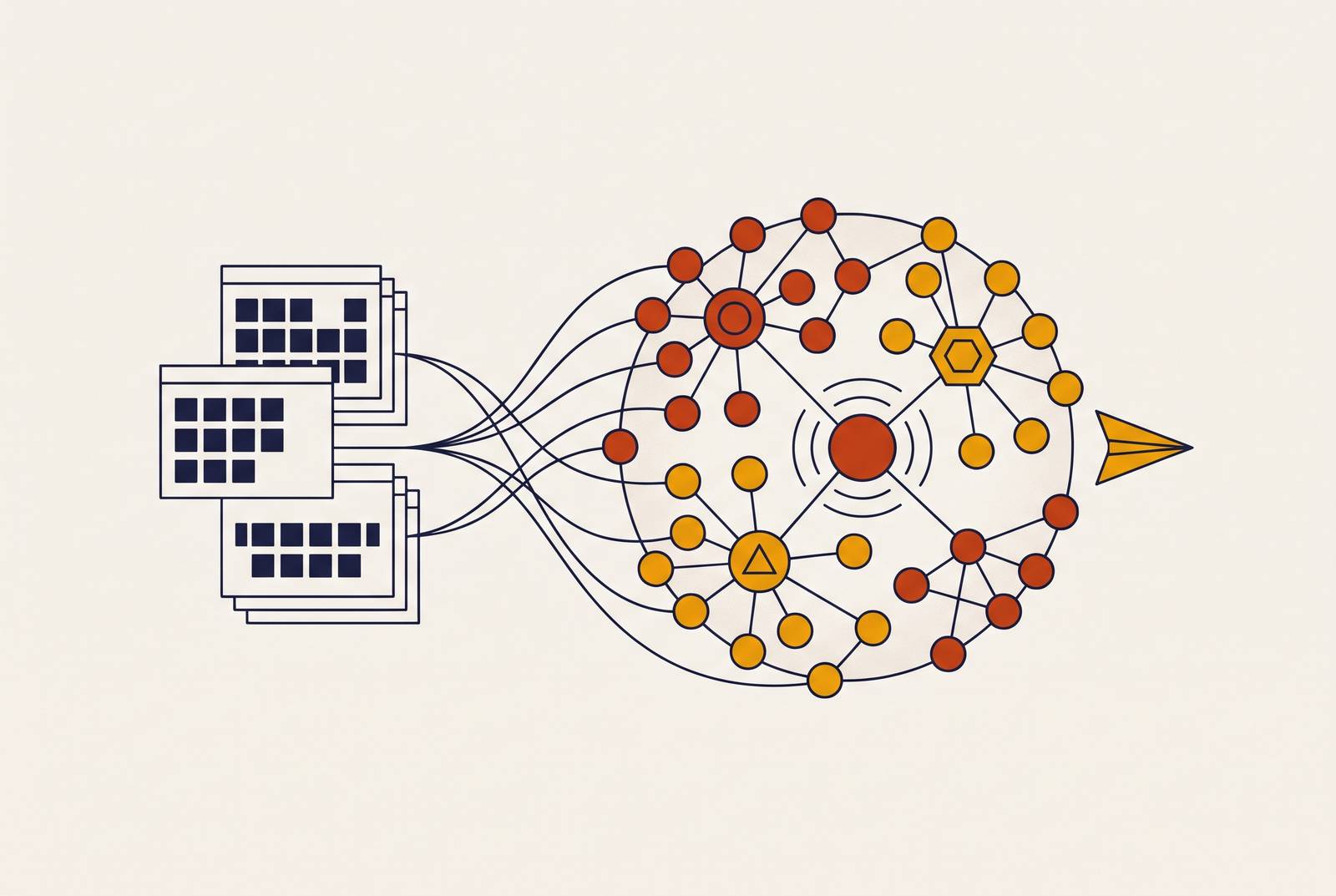
AI-powered investor targeting and thesis decoding for startup founders should begin with recent investments. To turn portfolio pages into a live thesis map, group recent deals by domain, find the partners behind them, and check the fit against what the fund is doing now and what portfolio founders know. This workflow produces a smaller, better-qualified outreach list than a database alone can produce.
Why a VC's thesis page is a marketing artifact, not a sourcing signal
A founder receives a first-call rejection for thesis fit despite having a company that appears to match the investor’s website exactly. The site says the fund invests in precisely this area. Yet a published thesis describes what the fund intended to back when someone last updated the page, while partners may already be deploying against a different set of priorities.
Stage drift appears when a fund advertises pre-seed and seed but writes Series A and B checks as its vehicle grows. Sector drift appears when a fintech mandate produces logistics, proptech, and infrastructure software deals connected by transaction revenue. Geography drift occurs when a stated West Coast focus gives way to investments concentrated in Texas and Florida following founder migration. Model drift appears when a fund that says it leads rounds and takes board seats shifts toward follow-on participation without board seats as partnership bandwidth tightens.
Investors can make these changes without trying to mislead founders. Thesis drift simply happens faster than website updates. Consider a fund whose site promises to back founders decarbonizing the built environment, but whose recent investments include logistics software, manufacturing ops tools, and EV charging networks. An industrial emissions founder could read that promise as a fit and still receive a first-call pass.
What portfolio behavior actually reveals that thesis copy cannot
A portfolio with several businesses built around transaction revenue suggests a different conviction from one whose companies share only a fintech label. The business model connects otherwise different markets. For a founder, that pattern creates a more precise basis for comparison than whether both companies appear in the same database category.
Recent seed investments led by the firm indicate something different from follow-on participation in companies it backed earlier. Partner attribution then makes the pattern actionable by distinguishing partners personally deploying in the domain from those associated with older investments. A firm-level match does not resolve that distinction.
An investor who was prolific in a category two years ago may already have too much exposure to add another position. Several related companies therefore suggest evaluation infrastructure, but do not establish that the fund has room for another investment. Recent deals help show what the fund wants to back now, while older deals show experience it can keep as its thesis changes. Portfolio reading is intelligence work because it separates those signals instead of collapsing them into a single sector match.
The recency threshold: how far back to read and what to trust
The primary window is the last 12–18 months of investments. Deals from that period show the fund’s active thesis and deployment pace, while older deals help explain the evaluation infrastructure it has built. Recency must come before the deeper clustering work. Otherwise, a large historical portfolio can overwhelm the smaller set of investments that best reflects what the partnership is doing now.
Deals from 2019–2021 belong to a different deployment environment, check size logic, and partner composition. Treating them as equivalent to current investments creates false fit signals, even when the company descriptions look closely aligned. Those investments give a fund historical understanding of a category without establishing that it is currently seeking another company in it.
The thesis page itself also needs a recency test. If it has not been updated in 18 or more months and portfolio behavior has drifted from its language, the portfolio should take precedence. Neither age nor disagreement should be considered in isolation.
How to build a domain-clustering map from a portfolio page
The practical workflow starts with the recent portfolio. First, collect every portfolio company from the last 18 months and record its problem domain, business model, and deployment stage. A sector label alone is not enough. The purpose is to make companies comparable by what they solve, how their businesses work, and where the investor entered.
Second, tag each company with the sub-sector it works in. Fintech is too broad a label to show a useful cluster, but embedded lending infrastructure for SMB vertical software names a specific area the fund can invest in. Precision determines what the map can reveal. If the tags describe only large markets, the resulting groups will reproduce the ambiguity of the thesis page and obscure the logic behind the checks.
Third, count adjacencies alongside exact matches. Three or more companies solving adjacent problems in the same technical or regulatory layer signal a thesis with evaluation infrastructure behind it. Businesses in different sectors can face the same constraints. That connection is useful to a founder whose company does not resemble an existing investment at first glance but requires the same kind of technical or regulatory understanding.
Fourth, assess the conviction type through the portfolio’s internal consistency. A thematic fund expresses a coherent macro bet across its deals, while a generalist fund behaves more opportunistically and through relationships. The label the firm uses is secondary here.
Fifth, find which partners made the adjacent deals. Partner attribution turns the domain cluster into an outreach destination and prevents a founder from assuming that interest is shared equally across the partnership. The finished map has one page per target firm, with recent deals grouped by domain cluster, partner attribution for each cluster, and one sentence on what the fund’s current thesis seems to be.
Reading partner content and conference presence as a live activity signal
Partner behavior supplies a second layer of evidence because portfolio pages can also lag. Recent writing and speaking may reveal active conviction weeks or months before a new investment appears on the firm’s website. Specificity makes a detailed post about a technical or market problem a clearer demonstration of interest and evaluation capacity than broad enthusiasm for a sector.
That distinction sharpens the partner attribution already established by the map. A partner who has written about the founder’s subsector in the last year offers a stronger signal than a firm whose website merely names it as a focus area. Conference choices can add context to that interest when considered alongside the deal and content evidence.
Convergence is the strongest result of this comparison. When recent portfolio clustering and detailed partner content point to the same domain, they give a founder more reason for cold outreach than either signal alone. Content pointing away from an established cluster may reflect a shift that has not yet appeared in the portfolio, leaving a specific uncertainty for human qualification to resolve.
Why talking to a portfolio founder is the highest-confidence qualifier available
A single 30-minute call with a founder who has taken money from the target partner provides insight that portfolio analysis and content tracking cannot match. The call tests current activity and evaluation depth directly. It can reveal whether the partner is seeking new deals, whether the fund has finished its deployment period, and whether the partner’s questions reach the right level of specificity. It can also distinguish investors who are helpful after wiring capital from those who remain hands-off.
The call is a structured qualification step. The founder should ask what the partner actually asked in the partner meeting and how specific those questions were. The next question concerns whether the partner is currently in deal mode or portfolio management mode. The final question asks whom at the firm the portfolio founder would route a company like this to directly. Together, the answers produce a defined output, namely an assessment of current appetite, demonstrated evaluation depth, and the appropriate person to contact.
This conversation belongs before outreach. By the partner meeting, the initial qualification window has closed and the opportunity to enter through a warm introduction has passed. A portfolio founder willing to endorse the approach can turn a cold email into a relationship-backed referral. That is the highest-leverage reply-rate improvement available in this workflow.
Turning the map into a tiered outreach list before the first message goes out
The ranking should use three converging signals. Portfolio cluster match establishes domain adjacency to recent deals. Activity recency establishes new investments in the founder’s category during the last 12 months, while partner content alignment establishes recent writing or speaking about the relevant domain. Brand and fund size do not replace these criteria. The output should narrow the list.
Tier 1 contains investors for whom all three signals converge, making them the first outreach targets regardless of prominence. Tier 2 contains investors with two converging signals, such as strong portfolio fit and recent activity without a partner content signal, or strong content with an adjacent portfolio match. Those conversations form the second wave after Tier 1 outreach has begun.
Tier 3 is exploratory outreach. It includes single-signal cases such as thesis-page alignment without portfolio confirmation. These investors belong after Tier 1 and Tier 2 outreach is underway, regardless of how recognizable their names are. The distinction keeps uncertainty visible in the outreach order.
Accelerator founders should do this work before Demo Day. The event creates a brief window of investor attention that rewards an already-qualified list. Benchmark’s substantial capital raise in June 2026, including its first-ever growth fund, also illustrates why relationship formation can precede the round itself. General partner Everett Randle described the model as built on “meaningful and deep relationship with the entrepreneurs, and that can happen relatively early in the company's lifecycle, at seed, [Series] A, at [Series] B”. The map shows which firms to build that early relationship with before a raise opens.
Making the thesis map a repeatable pre-outreach step, not a one-time research project
A new investment in a direct competitor can create a conflict, while partner departures or hires can change the firm’s evaluation capacity in a domain. A new fund vehicle can alter check size logic and stage appetite. These developments require refreshes throughout the raise. A map built at the start and then left untouched remains a snapshot, even if the original research was precise.
The operating habit is to refresh the map before outreach rather than rebuild investor knowledge only when capital is needed. Repeated portfolio reading develops pattern recognition across firms and partners that compounds from one raise to the next. By Series A, that accumulated context can show which firms entered the category at seed and which partners wrote those checks. Tools can help with this work, but founders still have to use their judgment. Fundraising is a continuous research discipline, and the thesis map keeps outreach anchored to what investors are doing now.